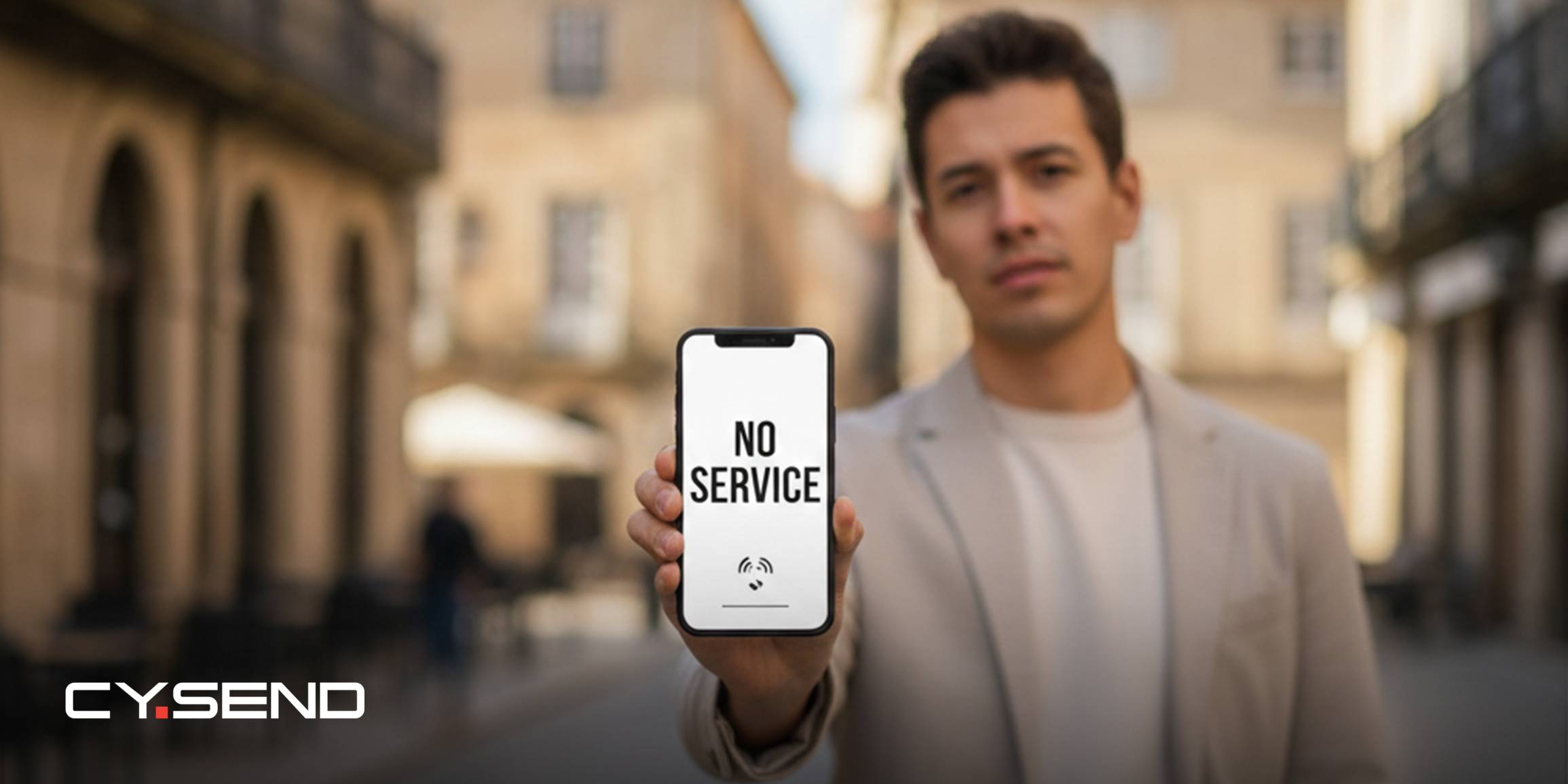
In today's connected world, staying online while traveling isn't just a convenience—it's essential. Whether you're navigating cobblestone streets in Prague, video calling family from a Barcelona café, or managing work emails from a train through the Swiss Alps, your smartphone has become your lifeline abroad. Yet for many international travelers, the excitement of a European adventure can quickly turn into financial shock when that first phone bill arrives home.
Picture this: You've just returned from an incredible two-week European vacation. The memories are fresh, the photos are uploading to the cloud, and then you check your phone bill. Instead of your usual monthly charge, you're staring at a figure that looks more like a down payment on a car. This nightmare scenario happens more often than you'd think, and it's entirely preventable.
Understanding the real problem: why roaming charges exist
Roaming charges occur when your phone connects to a network outside your home country. Your carrier must pay the foreign network operator for the privilege of keeping you connected, and they pass those costs directly to you—often with substantial markups. What makes this particularly frustrating is that these charges can accumulate silently in the background while you're simply living your life abroad.
The costs can be staggering. A single gigabyte of data that costs you pennies at home can suddenly cost $10, $50, or even more when roaming internationally. Multiply that by streaming music, checking maps, scrolling social media, and automatic app updates, and you can easily rack up hundreds or thousands of dollars without realizing it.
Real Story: the $143,000 mistake
Rene Remund from Florida visited a T-Mobile store before his Switzerland trip to discuss his travel plans. He felt prepared. Yet when he returned home, he faced a jaw-dropping $143,000 bill for using just 9.5 gigabytes of data. His phone hadn't been properly configured for international roaming, and Switzerland—not being part of the EU—didn't fall under any roaming agreements. Only after hiring a lawyer and involving local media did T-Mobile credit his account. His mistake? Assuming he was covered and not understanding the technical setup required.
The European roaming landscape: what you need to know
If you're traveling within the European Union, there's good news. The EU's "Roam Like at Home" regulations mean that if you have a mobile plan from an EU country, you can use your phone across all 27 EU member states plus Iceland, Liechtenstein, and Norway without additional charges. As of January 2026, Ukraine and Moldova have also joined this free roaming area, expanding coverage even further.
However, this protection comes with important caveats. The regulations include a "fair use policy" that requires you to spend more time in your home country than abroad. If you're using your phone permanently in another country, carriers can apply surcharges. Additionally, data caps exist based on your plan type, with wholesale rates capped at €1.30 per gigabyte in 2025, dropping to €1.10 in 2026, and reaching €1.00 by 2027.
The critical exception: not all of Europe is the EU
Here's where many travelers get caught. Popular destinations like Switzerland, the United Kingdom (post-Brexit), Turkey, and the Balkans are not covered by EU roaming regulations. British travelers alone spend £573 million annually on roaming charges when visiting EU countries, a cost that didn't exist before Brexit. If you're visiting these countries, you're subject to your carrier's international roaming rates—which can be astronomical.
Why traditional solutions fall short
When faced with roaming charges, most travelers turn to familiar solutions that often create new problems. Buying a local SIM card in each country sounds practical until you're juggling multiple phone numbers, losing access to two-factor authentication codes, and missing important calls from home. International roaming packages from your home carrier offer convenience but come with steep daily fees—typically $10 to $12 per day—that can add $140 to $336 to a two-week trip.
Relying solely on WiFi seems like a free solution, but it severely limits your mobility and functionality. You can't use navigation while walking, can't call a ride when you need one, and can't stay connected during transit. Public WiFi also poses significant security risks, especially when accessing banking apps or making purchases.
Common myth: "I'll just turn off data roaming"
Many travelers believe that simply disabling data roaming in their phone settings provides complete protection. While this prevents most data charges, your phone can still connect to networks for calls and texts—which also incur roaming fees. Additionally, some phones have been known to re-enable data roaming after software updates. The only truly safe approach is enabling airplane mode and manually turning on WiFi, or using a dedicated travel data solution.
A modern approach: smart connectivity for today's traveler
The travel connectivity landscape has evolved dramatically in recent years, offering solutions that didn't exist even a few years ago. The most significant innovation is the eSIM—an embedded SIM card built into your phone that can be activated digitally without any physical card swapping. This technology has revolutionized how smart travelers stay connected abroad.
eSIMs allow you to maintain your home number for calls and texts while using a separate data plan for internet connectivity. This means you never miss important messages or authentication codes, but you're not paying exorbitant roaming rates for data. Plans are typically purchased before or during your trip through an app, activated instantly, and offer predictable, prepaid pricing with no surprise bills.
Regional plans vs. country-specific plans
For multi-country European trips, regional eSIM plans offer the best value and convenience. Providers like Airalo, Roafly, and BLIVALE offer Europe-wide plans covering 30-35 countries, with prices starting around €21 for seven days of unlimited or high-volume data. This eliminates the need to purchase and activate a new plan every time you cross a border—perfect for the classic European rail adventure.
Country-specific plans make more sense for longer stays in a single location, as they often provide better speeds and lower latency by connecting directly to local networks rather than routing through international gateways. Digital nomads spending a month or more in one place typically find better value and performance with country-specific options.
Beyond connectivity: smart payment solutions
Staying connected is only part of the modern traveler's challenge. International payments, subscription access, and online shopping while abroad present their own set of obstacles. Geographic restrictions can prevent you from accessing streaming services, booking local experiences, or making purchases from region-specific websites. Payment method limitations mean your home credit card might be declined or subject to foreign transaction fees.
This is where services like CY.SEND can complement your travel connectivity strategy. When you need to make international purchases, top up mobile credit, or access services that require local payment methods, virtual card solutions provide flexibility without the hassle of opening foreign bank accounts. Combined with a reliable eSIM for data, you're equipped to handle both connectivity and commerce seamlessly.
💡 Pro tip: the dual-SIM strategy
If your phone supports dual SIM (one physical, one eSIM, or two eSIMs), keep your home SIM active for calls and texts while using an eSIM exclusively for data. Set your phone to use the eSIM as the default for cellular data, but keep your home number active for voice. This way, you're reachable at your regular number, can receive verification codes, and avoid any data roaming charges. Just make sure to disable data roaming for your home SIM in settings.
Step-by-Step: how to set up worry-free european connectivity
Implementing a smart connectivity strategy doesn't require technical expertise. Follow these steps to ensure you stay connected without the financial stress.
Step 1: Check your phone compatibility
Before purchasing an eSIM, verify that your device supports the technology. Most iPhones from iPhone XS and newer, and Android phones from 2020 onwards include eSIM capability. Check your phone's settings under "Cellular" or "Mobile Network" to see if you have an option to add an eSIM or cellular plan. You can also dial *#06# to see if an EID (eSIM identifier) appears—if it does, you're good to go.
Step 2: Choose your eSIM provider and plan
Research providers based on your specific travel itinerary. For multi-country trips, prioritize regional plans. Compare data allowances, validity periods, and coverage areas. Read recent reviews to check for connection reliability in your specific destinations. Most providers offer plans ranging from 1GB for short trips to unlimited data for extended stays, with prices typically between $5 and $50 depending on duration and data volume.
Step 3: Purchase and install before you leave
Buy your eSIM while you're still at home with reliable internet access. After purchase, you'll receive a QR code via email. Go to your phone's cellular settings and select "Add Cellular Plan" or "Add eSIM." Scan the QR code with your camera, and the eSIM profile will download to your device. Don't activate it yet—wait until you arrive at your destination to avoid wasting validity days.
Step 4: configure your settings correctly
This is the critical step where many travelers make mistakes. Once you've installed the eSIM, go into your phone's settings and configure the following: Set your home SIM as the default line for voice and SMS. Set the eSIM as the default line for cellular data. Crucially, disable data roaming for your home SIM to prevent any accidental charges. Enable data roaming for your eSIM (this won't incur charges since it's a local plan). Label each line clearly—"Home" and "Travel Data"—so you always know which connection you're using.
Step 5: Activate upon arrival
When you land in Europe, turn on your eSIM in your phone's settings. It should connect to a local network within a few minutes. Test the connection by opening a web browser with WiFi turned off. If you don't connect immediately, try restarting your phone or manually selecting a network in your cellular settings. Most eSIM providers offer 24/7 customer support through their apps if you encounter issues.
✅ Quick win: set this up tonight
Even if your trip is months away, take 10 minutes tonight to check your phone's eSIM compatibility and download an eSIM provider app. Browse available plans for your destination so you understand pricing and options. When your departure date approaches, you'll be able to purchase and install your eSIM in minutes rather than scrambling at the airport or arriving without connectivity.
Real user experiences: success stories from smart travelers
Sarah, a digital marketing consultant from Toronto, spent three months working remotely across Portugal, Spain, and France. "I used to pay $12 per day for my Canadian carrier's roaming package, which would have cost me over $1,000 for the trip," she shares. "Instead, I bought a 30-day European eSIM with 50GB for €35, renewed it twice, and spent a total of €105 for three months of connectivity. The savings paid for an entire week of accommodation."
Marcus, a retiree from Australia, learned about roaming charges the hard way on his first European trip. "I came home to a $2,400 bill after two weeks in Italy. I thought I had an international plan, but I'd only added it for calls, not data. My phone was backing up photos to the cloud the entire time." For his next trip, he took a different approach. "I bought an eSIM before leaving, kept my Australian number active for emergencies, and used the eSIM for everything else. Total cost: $28 for two weeks. I'll never travel without an eSIM again."
For families, the savings multiply. The Chen family from Singapore traveled through six European countries with their two teenage children. "Four phones on international roaming would have cost us $48 per day—$672 for two weeks," explains Mr. Chen. "We bought four eSIMs with a family discount for $120 total. The kids could use maps, translate menus, and stay in touch with friends without us worrying about the bill."
Common mstakes to avoid: learn from others' expensive errors
Even with the best intentions, travelers continue to make costly mistakes. Understanding these common pitfalls can save you from joining their ranks.
Mistake #1: Assuming Your Plan Covers International Roaming
Never assume. Contact your carrier directly and ask specific questions about your plan's international coverage. Get confirmation in writing via email or chat. Ask about daily rates, data caps, and which countries are covered. Some plans include free roaming in select countries but charge premium rates in others. The five minutes spent clarifying this could save you thousands.
Mistake #2: Forgetting about cruise ships and flights
If your European adventure includes a Mediterranean cruise or you're tempted to use WiFi on flights, be extremely cautious. Maritime and aviation networks use satellite connections that can cost $10 to $30 per megabyte—yes, per megabyte, not gigabyte. A single photo upload could cost $50. Always enable airplane mode on ships and planes unless you've purchased a specific onboard package and understand the pricing.
Mistake #3: Letting apps run wild in the background
Your phone is constantly working even when you're not actively using it. Email syncing, app updates, cloud photo backups, and social media refreshes all consume data. Before traveling, go into your phone's settings and disable background app refresh for all non-essential apps. Turn off automatic app updates. Disable cloud photo backup over cellular data. These simple settings changes can reduce your data consumption by 60-70%.
Mistake #4: Not testing your setup before leaving
Install and configure your eSIM before your trip, but don't activate it until arrival. However, do verify that it's properly installed and that your settings are configured correctly. The last thing you want is to discover a problem when you're standing in a foreign airport with no internet access to troubleshoot. Most eSIM providers allow you to install the profile without activating it, preserving your validity period.
Mistake #5: Buying yoo little data
It's tempting to save money by purchasing the smallest data package, but running out of data mid-trip creates stress and often costs more to top up. A moderate user typically consumes 2-3GB per week when traveling (navigation, messaging, social media, occasional video calls). Heavy users or those working remotely should budget 5-10GB per week. Most eSIM providers allow you to purchase additional data if needed, but it's more economical to buy adequate data upfront.
💡 Pro tip: monitor your usage daily
Most eSIM provider apps show real-time data usage. Check it every evening to understand your consumption patterns. If you're burning through data faster than expected, investigate which apps are the culprits in your phone's data usage settings. You might discover that a single app is consuming 80% of your data—often streaming services, social media, or cloud backup services running in the background.
Expert tips for best results: maximize value and performance
Once you've mastered the basics, these advanced strategies will help you optimize your travel connectivity experience.
Download offline maps before you go
Google Maps allows you to download entire city or regional maps for offline use. Before your trip, connect to WiFi and download maps for all your destinations. This provides full navigation capability even without data, serving as a backup if your eSIM has connectivity issues. Offline maps also preserve battery life since your phone isn't constantly searching for signals.
Use WiFi strategically for heavy tasks
Save bandwidth-intensive activities for WiFi connections at your accommodation. Upload photos and videos, download entertainment for flights or train rides, and make video calls when connected to WiFi. Use your cellular data for essential on-the-go needs: navigation, messaging, quick searches, and ride-hailing apps. This approach makes even modest data packages last significantly longer.
Consider portable WiFi for groups
If you're traveling with family or a group, a portable WiFi hotspot device might offer better value than multiple eSIMs. Devices like those from Rent'n'Connect provide unlimited data across Europe for $8-12 per day, which can be shared among multiple devices. For a family of four, this could be more economical than four separate data plans, plus it provides connectivity for laptops and tablets.
Keep your home number active for security
Many banking apps, email accounts, and services use SMS-based two-factor authentication tied to your home phone number. If you completely replace your SIM with a local one, you might find yourself locked out of critical accounts. The dual-SIM approach—keeping your home number active for calls and texts while using an eSIM for data—ensures you never miss authentication codes or important calls.
Leverage virtual cards for international transactions
Connectivity is only half the equation for seamless international travel. When you need to book local experiences, purchase tickets, or access region-specific services, payment barriers can be just as frustrating as connectivity problems. Platforms such as CY.SEND offer virtual card solutions that help you navigate international payment requirements without carrying multiple physical cards or dealing with foreign transaction fees. Combined with reliable data connectivity, you're equipped to handle any situation that arises during your travels.
Future trends: what's coming next in travel connectivity
The travel connectivity landscape continues to evolve rapidly, with several emerging trends that will make international travel even more seamless in the coming years.
eSIM technology is becoming standard rather than optional. Major phone manufacturers are moving toward eSIM-only devices, eliminating physical SIM card slots entirely. Apple's iPhone 14 and newer models sold in the United States already lack physical SIM trays. This shift will make instant, digital connectivity the default experience for all travelers within the next few years.
Roaming regulations are expanding geographically. The EU's addition of Ukraine and Moldova in January 2026 signals a trend toward broader roaming agreements. The Western Balkans region is next in line, and discussions are underway about potential agreements with other neighboring regions. This expansion could eventually create a roaming-free zone spanning from Portugal to Ukraine.
Artificial intelligence is being integrated into travel connectivity solutions. Some providers now offer AI-powered apps that automatically switch between available networks to optimize speed and reliability, predict data usage patterns, and alert you before you exceed your allowance. These intelligent systems will make connectivity management increasingly automatic and invisible to users.
Satellite connectivity is emerging as a backup option. Companies like Starlink and Apple's satellite emergency services are pioneering direct-to-phone satellite connections. While currently limited to emergency communications, this technology could eventually provide basic connectivity anywhere on Earth, eliminating dead zones entirely and serving as a backup when terrestrial networks are unavailable.
Taking action: your next steps
Avoiding roaming charges in Europe isn't about sacrificing connectivity or convenience—it's about making informed choices and using modern tools designed for today's travelers. Whether you're planning a two-week vacation, a multi-month remote work adventure, or frequent business trips, the strategies outlined here will keep you connected without the financial stress.
Start by assessing your specific needs: How long will you travel? Which countries will you visit? How much data do you typically use? Do you need to maintain your home phone number? Answering these questions will guide you toward the right solution, whether that's an eSIM, a portable WiFi device, or a combination of approaches.
The investment of time to set up proper connectivity—perhaps an hour of research and configuration—will save you hundreds or thousands of dollars and countless headaches. More importantly, it allows you to travel with confidence, knowing you can navigate unfamiliar cities, stay in touch with loved ones, manage emergencies, and share your experiences in real-time without watching the financial meter run.
Europe is waiting to be explored. Don't let roaming charges hold you back or diminish your experience. With the right preparation and tools, staying connected abroad can be as simple and affordable as using your phone at home.
FAQ: Your questions answered
Do I need to buy an eSIM for every country I visit in Europe?
No, regional eSIM plans cover 30-35 European countries with a single purchase. If you're visiting multiple countries, a regional plan is more convenient and cost-effective than buying individual country plans. You'll stay connected as you cross borders without any additional setup.
Will I lose my phone number if I use an eSIM?
No, your original phone number remains active. Most modern phones support dual SIM functionality, allowing you to keep your home number for calls and texts while using the eSIM exclusively for data. You can receive calls and messages at your regular number while avoiding roaming charges for internet usage.
How much data do I actually need for a typical European vacation?
A moderate user typically needs 2-3GB per week for navigation, messaging, social media, and occasional photo uploads. A two-week trip would require 5-6GB. If you plan to make video calls, stream content, or work remotely, budget 5-10GB per week. Most eSIM providers allow you to purchase additional data if you run out.
Can I use an eSIM if my phone is locked to a carrier?
It depends on your carrier and contract. Some locked phones support eSIM for international use even while locked, but others don't. Contact your carrier to verify, or request an unlock if you're eligible. Most carriers will unlock phones that are fully paid off or after your contract period ends.
What happens if I run out of data on my eSIM while traveling?
Most eSIM providers allow you to purchase additional data directly through their app using a credit card or payment platforms like CY.SEND. The top-up is usually activated within minutes. Alternatively, you can connect to WiFi at your accommodation or a café to purchase more data or switch to a different provider if needed.
Is it safe to use public WiFi in Europe for banking and shopping?
Public WiFi networks pose security risks, especially for sensitive activities like banking or shopping. If you must use public WiFi, always use a VPN (Virtual Private Network) to encrypt your connection. Better yet, use your eSIM data connection for any financial transactions, as cellular networks are significantly more secure than public WiFi.
Do EU roaming rules apply to the UK after Brexit?
No, the UK is no longer covered by EU roaming regulations. Some UK carriers voluntarily continue to offer free EU roaming, but they're not required to do so. Similarly, EU residents may face roaming charges when visiting the UK. Always check your specific carrier's policy for UK travel.
Can I share my eSIM data with other devices or travel companions?
Most phones with eSIM capability can create a personal hotspot, allowing you to share your data connection with other devices or people. However, this consumes your data allowance faster. Check your eSIM plan's terms, as some providers restrict or charge extra for hotspot usage, while others include it freely.
What's the difference between data roaming and international roaming?
Data roaming specifically refers to using mobile internet outside your home country, while international roaming encompasses all mobile services—calls, texts, and data. You can disable data roaming while still making calls and sending texts, though those will still incur roaming charges unless you have an international plan.
How do I know if my phone supports eSIM technology?
Check your phone's settings under "Cellular" or "Mobile Network" for an option to add an eSIM or cellular plan. Alternatively, dial *#06# on your phone—if an EID (eSIM Identifier) number appears, your device supports eSIM. Most iPhones from XS onwards and Android phones from 2020 onwards include eSIM capability.
Are there any countries in Europe where eSIMs don't work well?
eSIMs work reliably across most of Europe, but connection quality depends on the provider's network partnerships. Some budget eSIM providers may offer slower speeds or less reliable connections in smaller countries or rural areas. Read recent reviews specific to your destination, and consider purchasing from providers with strong network partnerships in your target countries.
Can I get a refund if I don't use all my eSIM data?
Most eSIM plans are non-refundable once activated, and unused data typically expires when the validity period ends. Some providers offer plans with longer validity periods (30-90 days) that might better match your actual usage. Purchase conservatively for your first trip, and adjust based on your actual consumption patterns for future travels.
Ready to travel smarter?
The world is more connected than ever, and you deserve to experience it without financial stress or connectivity anxiety. Whether you're planning your first European adventure or you're a seasoned traveler looking to optimize your approach, the tools and strategies outlined here will transform how you stay connected abroad. Start exploring eSIM options today, and step into your next journey with confidence.