Father’s Day around the world: dates, traditions, and how it is celebrated
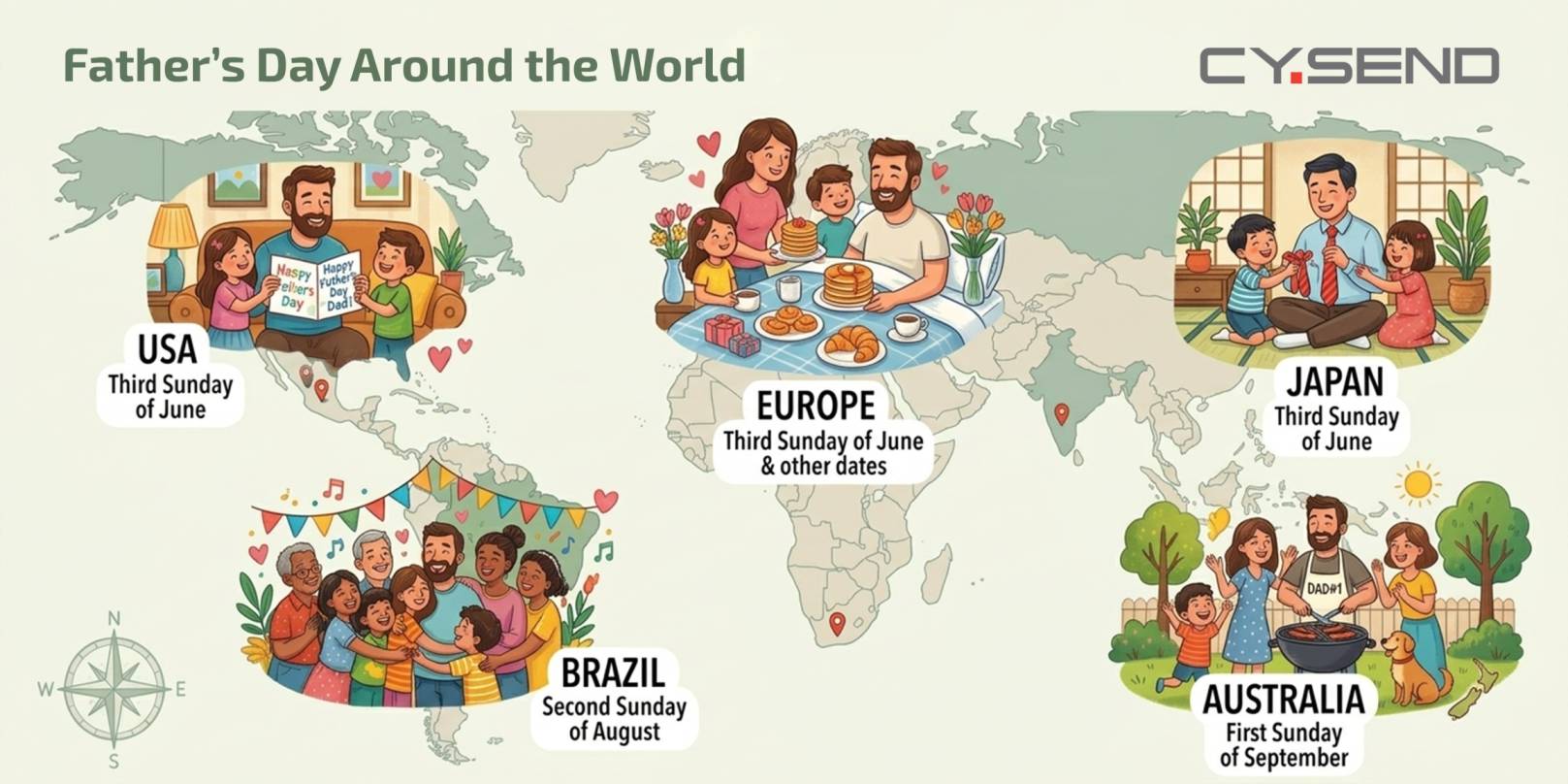
Father's Day feels familiar almost everywhere, but it does not arrive on the same date for everyone. That is part of what makes it so interesting. It is not only about answering a practical question like “when is Father's Day?” It is also about seeing how one family celebration changes from one culture to another. Some places connect it with religion. Some treat it as a modern family tradition. Some keep it simple with a meal, a phone call, or a handmade card. Others have customs that are very local and very memorable.
If you have ever wondered why Father's Day seems to move around the map, here is a clearer and more human guide to the celebration, including when it happens, where it happens, and how families mark it in different parts of the world.
Why Father's Day is not celebrated on the same date everywhere
The short answer is that Father's Day did not grow out of one single global tradition. Different countries adopted it in different ways, and many kept a date that made sense within their own culture.
In some places, the celebration is linked to Saint Joseph's Day on March 19. In many others, it follows the now very well-known third Sunday in June. And in a few countries, it has its own separate place in the calendar. Once you know that, the changing dates make much more sense.
The good thing is that the meaning behind the day is usually easy to recognize wherever you are: it is a moment to appreciate fathers and father figures, whether that means a big family lunch, a small gift, a quiet message, or simply spending time together.
That is why a global view is so useful. It helps explain not only the dates, but also the feeling behind them. For many people living across borders, Father's Day is also about finding small ways to feel closer to loved ones from abroad, even when the celebration happens far from home.
For some people, Father's Day means a long lunch around the table. For others, it may be a voice note sent across time zones, a video call, a thoughtful message, or even sending digital gifts worldwide in minutes. The format may change from one family to another, but the intention remains the same.
Countries that celebrate Father's Day on March 19
March 19 is one of the most meaningful Father's Day dates in Europe. It is especially associated with Saint Joseph, who is traditionally seen as a father figure. That connection gives the day a more religious and historical background than in some other countries.
In Spain and in Honduras, for example, the date is widely recognized and naturally linked with San José. In Italy, the celebration can feel especially warm and family-centered, with sweets, meals, and affectionate gestures playing an important role. Portugal also keeps March 19 as its Father's Day, which gives the date a clear place in the annual family calendar.
This March observance is a good reminder that Father's Day is not simply a June event that got exported everywhere. In some countries, it has a much older cultural rhythm.
Countries that celebrate Father's Day in June
If March belongs to Saint Joseph tradition in some countries, June is the month many people around the world most strongly associate with Father's Day. The third Sunday in June is one of the most widely observed dates globally.
This is the date used in countries such as the United States, Canada, Mexico, the United Kingdom, France, India, and South Africa. It is also observed in many other places across the Americas and beyond. In fact, a large group of countries follows this June pattern, which is one reason it tends to dominate international media, search trends, and brand campaigns.
In many parts of the Americas, this June celebration feels very familiar: families gather for lunch, children give cards or small presents, and the day is often marked with a relaxed, affectionate tone. In Mexico, for example, Father's Day is usually centered on family time, meals, and gift-giving. In the United States and Canada, it often includes barbecues, outings, sports, or a get-together at home.
June Father's Day is also the version many English-speaking readers are most likely to recognize first. That does not make it the only one, but it does make it the most internationally visible.
Countries that celebrate Father's Day in November
November surprises a lot of people. By the time autumn is settling in across northern Europe, Father's Day is only just arriving in some countries. The second Sunday in November is the key date in Sweden, Norway, Finland, Estonia, and Iceland.
This timing gives the celebration a completely different seasonal feeling. Instead of spring or early summer, it arrives during a colder and darker part of the year. That can make the day feel quieter, more intimate, and especially centered on family time at home.
In Sweden and Norway, for example, the November date is well established. Finland and Estonia also observe Father's Day on the second Sunday in November, and Iceland follows the same pattern. While customs vary from family to family, the atmosphere in these countries often feels less public and more personal than in heavily commercialized June campaigns.
For global brands and international families, November is an important reminder that Father's Day is not over once June has passed. In some markets, it is only just beginning.
Other countries with their own dates
Some countries do not fit neatly into the March, June, or November groups. Germany is a great example. There, Father's Day falls on Ascension Day, so the date changes every year. It is one of the most distinctive observances because it has developed its own strong customs and social atmosphere.
Germany is often mentioned for a very particular tradition: groups of men going on hikes or outings together, sometimes with wagons filled with food and drink. It is one of the clearest examples of how Father's Day can take on a personality of its own in a local culture.
Denmark is another interesting case. It celebrates Father's Day on June 5, the same day as Constitution Day. That overlap makes the date especially memorable and shows again that local history often shapes the calendar more than any international trend does.
How Father's Day is celebrated in different places
Even when the date changes, the heart of the celebration stays recognizable. Families usually use the day to say thank you, spend time together, and acknowledge the role fathers or father figures play in everyday life.
That said, the style of celebration can be very different. In some countries, Father's Day feels warm and domestic: breakfast at home, a handmade card, a family lunch, maybe a small gift. In others, it can be more social or even more playful. Germany's outdoor tradition is one example. In many countries across the Americas, the celebration often revolves around gatherings, food, and spending time with family.
In places where the date is linked to Saint Joseph, there can be a stronger sense of tradition and symbolism. In the Nordic countries, where Father's Day arrives in November, it can feel more understated and cozy. The same idea is there, but the mood changes with the season and the culture around it.
Why this matters for international families
For people living abroad, studying overseas, traveling often, or belonging to a family spread across different countries, Father's Day can be surprisingly easy to miss. One part of the family may be ready to celebrate in March, while another is thinking about June, and someone else is waiting until November.
That is why a global view is so useful. It helps explain not only the dates, but also the feeling behind them. It reminds us that there is no single correct version of Father's Day. What matters most is knowing which date matters to your family and marking it in a way that feels genuine.
For some people, that means a long lunch around the table. For others, it means a voice note sent across time zones, a video call, a letter, or a simple message that arrives on the right day. The format changes. The intention does not.
A celebration that is shared, even when the calendar is not
Father's Day around the world is a good reminder that global traditions are rarely as uniform as they first seem. The dates are different. The customs are different. The atmosphere can be different too. And yet, the meaning is easy to recognize almost everywhere: gratitude, affection, and a chance to pause and acknowledge someone important.
That may be the nicest part of all. Whether Father's Day arrives on March 19, the third Sunday in June, the second Sunday in November, or another local date entirely, the celebration keeps returning to the same simple idea: family connection matters.
The dates are different, the customs are different, and even the atmosphere can change from one place to another. And yet, the meaning is easy to recognize almost everywhere: gratitude, affection, and a chance to pause and acknowledge someone important. For many international families, occasions like this also become a reminder of how important it is to maintain emotional bonds from a distance, even when everyday life happens in different countries.
Frequently asked questions about Father's Day around the world
When is Father's Day around the world?
Father's Day does not have one universal date. Many countries celebrate it on the third Sunday in June, while others observe it on March 19, the second Sunday in November, or another local date.
Which countries celebrate Father's Day on March 19?
Spain, Italy, Portugal, and Honduras are among the countries that celebrate Father's Day on March 19.
Which countries celebrate Father's Day in June?
Many countries celebrate Father's Day on the third Sunday in June, including the United States, Canada, Mexico, the United Kingdom, France, India, and South Africa.
Which countries celebrate Father's Day in November?
Sweden, Norway, Finland, Estonia, and Iceland celebrate Father's Day on the second Sunday in November.
Why is Father's Day on different dates in different countries?
The date changes because the celebration developed through different religious, cultural, and historical traditions in different places.
Is Father's Day celebrated everywhere in the same way?
No. Some countries focus on family meals and gifts, some keep the day very simple, and others have unique customs shaped by local tradition.
What is special about Father's Day in Germany?
In Germany, Father's Day is linked to Ascension Day, and it is well known for outdoor gatherings and group outings.
What is special about Father's Day in Denmark?
In Denmark, Father's Day is celebrated on June 5, the same day as Constitution Day, which makes it especially easy to remember.
Why is Father's Day a useful topic for international readers?
It helps people understand different calendars, different family traditions, and how one celebration can mean slightly different things depending on where you are.
What can I give my dad for Father's Day if I want something simple, flexible, and easy to send?
A gift card can be a practical Father’s Day option, especially if you want to give your dad the freedom to choose something he will truly enjoy. CY.SEND can be a convenient solution for families looking for a simple, flexible gift, particularly when they are celebrating across distance or from another country.
Article Number: 2456
Author: Mar 11, 2026
Last Updated: Jun 12, 2026
Online URL: https://faq.cysend.com/article/father-s-day-around-the-world-dates-traditions-and-how-it-is-celebrated.html