Travel & Connectivity • Reading time: 1-2 minutes
The moment the plane tires hit the tarmac in a new country, the anxiety sets in. You turn off Airplane Mode and wait. Will you get that dreaded text message from your home carrier warning you about exorbitant roaming fees? Or will you be met with "No Service"?
In today’s hyper-connected world, staying online while traveling isn't just about posting vacation photos. It’s about navigating unfamiliar streets with maps, translating menus, accessing banking apps, and staying in touch with family.
For years, the standard advice for savvy travelers was to buy a local physical SIM card upon arrival. But the digital revolution has introduced a powerful new contender: the eSIM. This has sparked the great travel connectivity debate: eSIM vs local SIM.
As a global traveler or expat, the choice depends heavily on your destination, your budget, and your need for convenience. This guide will break down the pros, cons, and hidden realities of both options to keep you connected without breaking the bank.
Understanding the contenders: Physical vs. digital
Before diving into the comparison, let's clarify exactly what we are debating in the eSIM vs local SIM arena.
A local SIM is the tiny plastic card you are likely familiar with. You buy it in the destination country from a local provider. You physically remove your home SIM card with a paperclip and insert the new local one.
This gives you a local phone number and access to local rates, which are almost always cheaper than international roaming. However, these are usually prepaid services. Once you use the initial data allotment, you must add credit, known as a top-up or recharge.
An eSIM (embedded SIM) is a digital version of the physical card. It is a tiny chip already built into your smartphone’s hardware. You don't insert anything. Instead, you download a profile that tells your phone how to connect to a network.
Travel eSIM providers act as global brokers, selling data packages that work on local networks worldwide without requiring you to visit a store.
8 critical factors deciding the eSIM vs local SIM battle
When deciding between an eSIM vs local SIM, there is no single right answer. It depends entirely on your specific travel profile. Here are the eight essential factors to consider.
1. Device compatibility: The first hurdle
Before you even consider an eSIM, you must know if your phone can handle it. While most modern flagship phones are eSIM compatible, many older or mid-range budget phones are not.
Furthermore, your phone must be carrier unlocked. If you are still under contract with your home provider, they may have locked your device to their network, preventing the use of any other SIM, physical or digital.
The Verdict: If your phone isn't unlocked or eSIM capable, the eSIM vs local SIM debate is moot; you must use physical local SIMs or portable Wi-Fi.
2. The airport arrival stress test
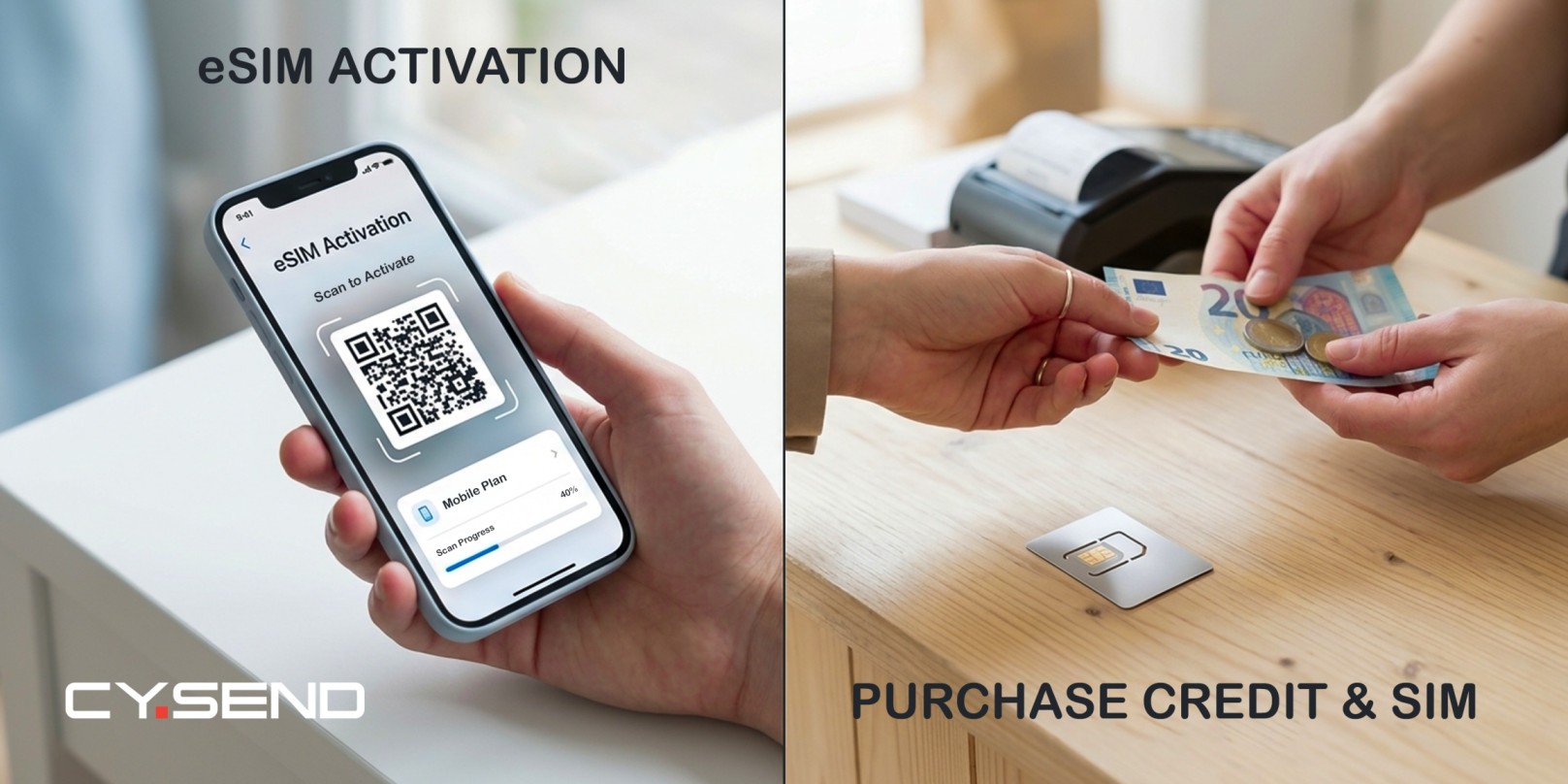
This is where eSIM shines brightest. With an eSIM, you purchase and set up your plan while sitting on your couch at home before you even pack your bags. Solutions like CY.SEND international eSIM pin codes allow you to buy a digital code and activate your data plan instantly, without needing to visit a store after landing.
For remote workers and digital nomads, having instant connectivity is essential to access tools and platforms they rely on daily. If you're working on the go, having the right setup goes beyond connectivity — it also includes choosing the right digital tools. Explore some of the essential apps for women who work remotely to stay productive from anywhere. When your plane lands, you simply turn on the eSIM line and you have instant data. Learn more about how to use your PIN code when purchasing an eSIM with CY.SEND.
With a local physical SIM, you land disconnected. You must navigate a busy airport, find an open kiosk, potentially deal with language barriers, and sometimes wait in long queues just to buy a SIM card.
The Verdict: For sheer convenience and immediate connectivity upon arrival, eSIM wins hands down.
3. Cost analysis: Short trips vs. long stays
Cost is usually the biggest factor for travelers. Generally speaking, local SIM cards bought directly from local carriers offer the lowest price per gigabyte of data. If you are staying in one country for a month, a local SIM is almost always cheaper.
Travel eSIMs are reselling access to those networks. They offer incredible convenience, but you pay a slight premium for it. For a weekend trip, the $5-$10 difference might be worth avoiding the hassle of finding a local store.
The Verdict: Local physical SIMs are usually cheaper for heavy data users and long stays. eSIMs are cost-competitive for short trips where convenience is king.
4. Keeping your home number active
This is a massive advantage for eSIM technology. Because the eSIM is digital, it doesn't occupy your physical SIM slot.
Most modern phones allow Dual SIM Dual Standby. This setup is especially useful if you're trying to how to avoid roaming charges in Europe while staying reachable on your primary number.You can keep your home SIM card in its slot to receive urgent calls and SMS texts from home, while setting your phone to use the travel eSIM for all data.
If you use a physical local SIM, you usually have to remove your home SIM. This means your home number goes dead until you swap it back, unless you carry a second phone.
The Verdict: If you need to remain reachable on your primary phone number, eSIM is the superior choice.
5. Network speed and latency
When you buy a local SIM from a major carrier in that country, you are a direct customer. You usually get top-tier network priority.
Travel eSIM providers are often roaming on local networks. While usually fast enough for standard use like maps and social media, you might occasionally experience slower speeds or higher latency compared to a direct local customer.
The Verdict: For guaranteed maximum speeds, a local physical SIM direct from a major carrier is often slightly better.
6. The ongoing challenge of local top-ups
Let's say you choose the local physical SIM route for a long trip in Brazil. You get a great deal on the initial card. Two weeks later, your data runs out.
How do you reload it? The local carrier's app might be in Portuguese. Their website might reject foreign credit cards. Finding an open physical store might be inconvenient.
This is a very real problem that many travelers face. It is also where services like CY.SEND become essential. If you have a local prepaid SIM in another country, you need a reliable way to send credit to it instantly from anywhere.
The Verdict: Local SIMs require ongoing management. Ensure you have a reliable partner for international mobile top-ups to keep the data flowing. How do I top up a foreign SIM card?
7. Multi-destination hopping
Are you doing a European tour, visiting France, Italy, and Germany in two weeks? Or perhaps backpacking through Southeast Asia?
If you use physical local SIMs, you might need to buy a new card in every single country, dealing with new numbers and registration processes each time.
eSIM providers excel here. They offer regional plans where one single digital profile covers 30+ countries. You cross a border, and it just works. Explore regional data plans.
The Verdict: For multi-country trips, regional eSIM packages offer unbeatable simplicity.
8. Physical security and hassle
Those physical nano-SIM cards are incredibly small. How many times have travelers lost their home SIM card after swapping it out on an airplane tray table? It happens constantly.
eSIMs are software. There is nothing to lose, nothing to break, and no need to carry that tiny metal ejection tool everywhere you go.
The Verdict: eSIM is more secure and less fiddly than dealing with physical cards.
Comparison table: At a glance
| Feature | Travel eSIM | Local Physical SIM |
| Setup | Instant digital download before departure. | Must physically buy and insert card upon arrival. |
| Convenience | High. Connect immediately upon landing. | Low. Requires finding a store and potential queuing. |
| Cost per GB | Moderate. Slight premium for convenience. | Low. Usually the cheapest local rates available. |
| Keep Home Number? | Yes (via Dual SIM capability). | No (unless you have a dual-slot phone). |
| Multi-Country Use | Excellent. Easy regional plans available. | Difficult. Usually requires a new SIM per country. |
| Refilling Data | Easy via the provider's app. | Can be difficult with foreign credit cards. |
| Physical Risk | None. It's digital. | High risk of losing your tiny home SIM card. |
Your connection, your rules
The eSIM vs local SIM debate doesn't have a single winner.
If you are an adventurous backpacker on a budget staying in one country for a month, the local physical SIM is likely your best bet for value. If you are a business traveler hopping across three capitals in a week, the eSIM is a game-changer.
Whichever route you choose, the goal is the same: seamless connection to the people and information you need, especially when it comes to family. Learn how how CY.SEND helps families stay connected makes this easier across borders.
Remember that even if you choose the physical local top-up route, you don't have to struggle with foreign payment systems. CY.SEND exists to make recharging prepaid phones globally as easy as sending a text message.
Travel smart, choose the option that fits your journey, and stay connected. For more insights on international mobile trends, check out this GSMA report on eSIM technology.
Frequently asked questions (FAQs)
1. What is the main difference between eSIM and local SIM?
A local SIM is a physical chip you insert into your phone to access a local network. An eSIM is a digital profile embedded in your phone that you download to access networks without needing a physical card swap.
2. Do I need Wi-Fi to install an eSIM?
Yes. You must have an internet connection to download and activate the eSIM profile initially. It is best to do this at home before you travel or using airport Wi-Fi.
3. Can I use WhatsApp with an eSIM or local SIM?
Yes, absolutely. WhatsApp relies on an internet connection. Whether that connection comes from Wi-Fi, an eSIM, or a local physical SIM, your WhatsApp will work normally and keep your existing number and chats.
4. How do I know if my phone is unlocked for international use?
You must contact your home mobile carrier. If you are still under a contract or financing plan, your phone is likely locked to their network. They must authorize an unlock before you can use any other SIM.
5. I’m an expat living in Spain. My mom is visiting from the US and bought a local Spanish SIM. How can I add money to her phone for her?
This is a common scenario. You can easily use a global top-up service. CY.SEND allows you to instantly send mobile credit to prepaid numbers in over 160 countries using your own payment method. See supported countries
6. Does using an eSIM drain my battery faster?
Generally, no. In some cases, if your phone is constantly searching for signal on two active networks simultaneously in an area with poor coverage, it might use slightly more battery, but the difference is usually negligible.
7. Are local SIM cards always cheaper than eSIMs?
Almost always, yes, if you look strictly at the price per gigabyte of data. You are buying directly from the source without a middleman. The extra cost of an eSIM is the price you pay for convenience.
8. Can I have multiple eSIMs on my phone?
Yes. Most modern iPhones, for example, allow you to store eight or more eSIM profiles, though you can usually only have one or two active at the same time.
9. Is it safe to buy a local SIM card from a street vendor?
It depends on the country, but it is generally safer to buy from an official carrier store. Official stores ensure the SIM is properly registered in your name, which is a legal requirement in many countries.
10. What if I choose a local SIM but can't top it up online?
This is a common frustration. If the local carrier doesn't accept your international credit card, you need a third-party facilitator. CY.SEND specializes in bridging this gap, allowing you to recharge mobile credit globally securely.