Gifting & Community • Reading time: 1-2 minutes
Imagine sending a birthday package across the ocean to a loved one living abroad. You carefully select the item, wrap it in decorative paper, cushion it with protective packaging, place it into a cardboard box, and pay for international shipping. A few days later, it arrives. While the gesture is meaningful, the process also involves material consumption, transportation emissions, and packaging waste that are easy to overlook.
As global mobility and online commerce continue to grow, many people are rethinking how to maintain long-distance relationships while reducing unnecessary environmental impact. For World Environment Day, this conversation extends beyond reusable bags and energy-efficient appliances. It also invites a closer look at the environmental footprint associated with traditional gifting and international shipping.
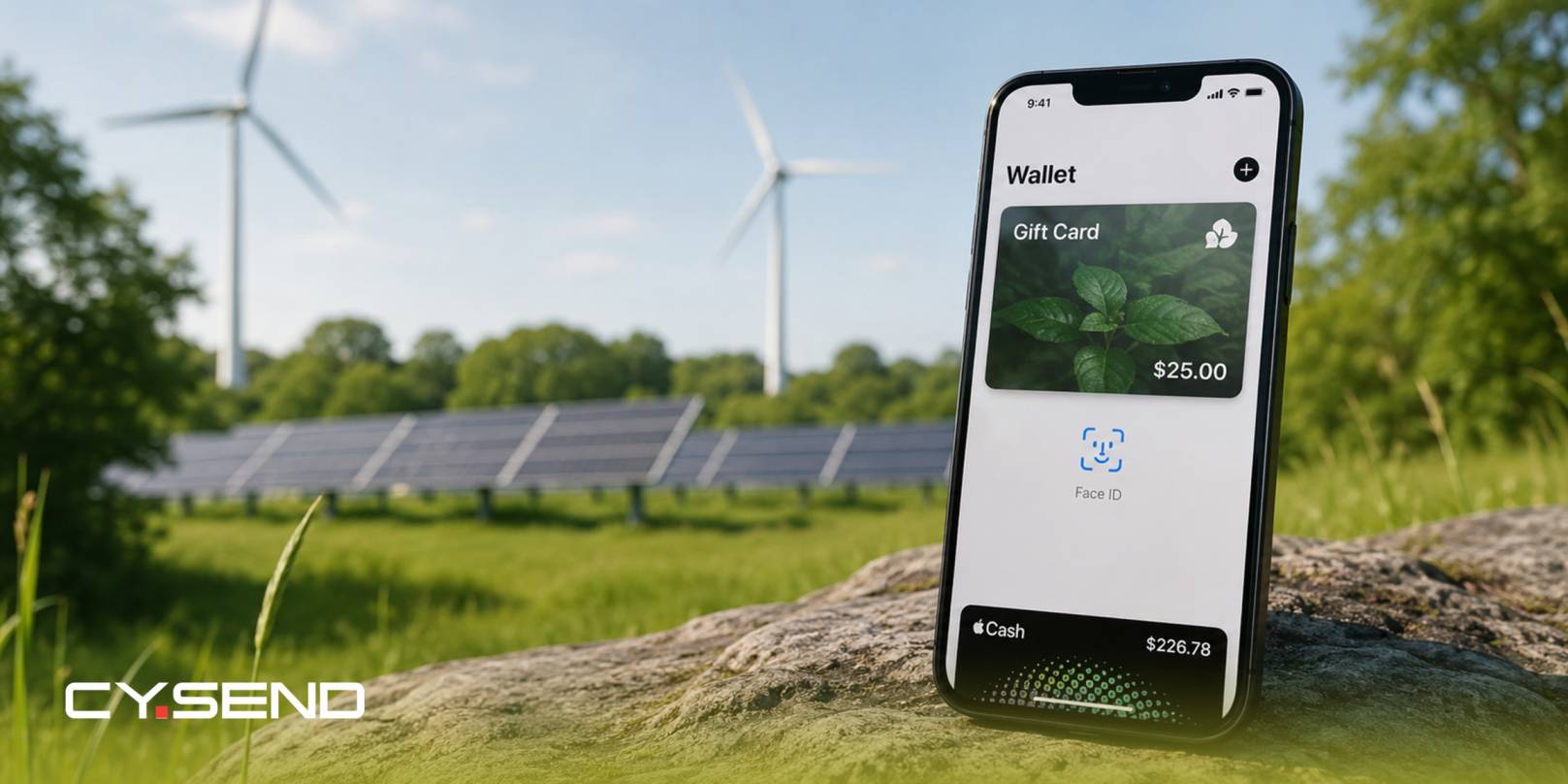
Digital gift cards are increasingly being considered as one lower-impact alternative in certain situations. While they are not environmentally neutral and still rely on digital infrastructure and energy-intensive technologies such as servers and data centers, they can help reduce some of the material waste and transport emissions associated with physical gifting.
The environmental footprint of traditional gifting
Understanding the environmental implications of physical gifting requires looking at the full life cycle of products and packaging materials. From manufacturing and transportation to disposal, each stage carries an environmental cost.
During major holidays and peak shopping periods, the volume of packaging waste and shipping activity rises significantly. Physical gifts often involve multiple layers of material use, including cardboard, plastics, inks, adhesives, and fuel-intensive logistics networks.
The PVC challenge behind many physical gift cards
Many physical gift cards are manufactured using Polyvinyl Chloride (PVC), a type of plastic associated with environmental concerns during both production and disposal. According to the Center for International Environmental Law (CIEL), PVC manufacturing can generate harmful chemical byproducts and depends on fossil-fuel-based inputs.
In practice, many plastic gift cards are difficult to recycle because of their size, coatings, or magnetic components. As a result, they may end up in landfills where plastics can persist and gradually fragment into smaller particles over time.
The emissions associated with international shipping
For expats, travelers, and globally distributed families, physical gifting often depends on international transportation networks. Aviation and maritime shipping both contribute to greenhouse gas emissions, especially when products are shipped quickly across long distances.
Express air freight, in particular, tends to have a higher carbon intensity compared to slower or more localized forms of transportation. While occasional shipping is unlikely to be the primary driver of an individual’s environmental footprint, reducing unnecessary shipments where possible can still contribute to broader sustainability efforts.
Reducing material demand through digital alternatives
One reason digital gift cards are gaining attention is that they remove many of the physical components involved in traditional gifting. There is no plastic card to manufacture, no packaging to discard, and no international delivery chain required for the transaction itself.
This aligns with broader sustainability concepts such as dematerialization and resource efficiency, both of which aim to reduce unnecessary material consumption without eliminating convenience or social connection entirely.
| Aspect | Digital Gift Cards | Physical Gift Cards |
|---|---|---|
| Material Use | Do not require plastic, paper packaging, or physical production materials | Often made from PVC plastic and additional packaging materials |
| Delivery Process | Delivered instantly through email or apps without shipping | Usually require transportation, retail distribution, or postal delivery |
| Waste Generation | Reduce packaging and disposal waste in many cases | Can contribute to landfill waste and are often difficult to recycle |
| Convenience for International Use | Easy to send across borders without customs or shipping delays | International delivery may involve longer transit times and added logistics |
| Flexibility and Storage | Stored digitally on phones or online accounts, reducing physical clutter | Can be misplaced, damaged, or discarded after use |
Comparing digital and physical systems
Digital services are not impact-free. Data centers, cloud storage, and online payment systems all consume electricity and require physical infrastructure. However, many life-cycle assessments suggest that digital delivery methods can have a lower environmental footprint than manufacturing and transporting physical goods, particularly for low-value or purely symbolic items.
The scale of the difference depends on factors such as the product type, shipping distance, energy sources, and consumer behavior. For that reason, digital gift cards are better understood as one potentially lower-impact option rather than a universally sustainable solution.
Reducing unwanted consumption
Another advantage often associated with digital vouchers is flexibility. Research on consumer behavior has shown that some physical gifts go unused or are quickly discarded, creating unnecessary material waste.
Digital gift cards may reduce this issue by allowing recipients to choose products or services they actually need or plan to use. In some cases, this can help avoid overconsumption and reduce the likelihood of unwanted items ending up as waste.
Practical tips for more intentional gifting (with digital gift cards)
1. Choose digital gift cards for cross-border gifting whenever possible
When sending gifts internationally, consider using digital gift cards instead of physical parcels. This helps avoid packaging waste and reduces the need for long-distance shipping, especially for symbolic or non-essential gifts.
Platforms like CY.SEND make this process easier by allowing users to send digital affection across borders instantly, without dealing with logistics or delivery delays.
2. Match the gift to the recipient’s actual needs, not assumptions
Before choosing a gift, think about what the person can realistically use in their daily life. Digital gift cards for groceries, transport, or essential services are often more practical than physical items that may not fit their lifestyle or location.
3. Avoid “default physical gifting” during holidays
A lot of physical gifts are chosen out of habit rather than intention. Instead of automatically buying and shipping items, consider whether a digital alternative could achieve the same emotional or practical purpose with less waste.
4. Use digital gifts to support local economies directly
One overlooked benefit of digital gift cards is that they can be tied to local retailers or services in the recipient’s country. This allows the value to circulate locally rather than being tied up in international logistics chains.
With services like CY.SEND, users can select gift cards from different regions, making it easier to support local businesses abroad while still gifting meaningfully.
5. Combine digital gifts with personalized messages
A common concern is that digital gifts feel “less personal.” This can be easily solved by pairing them with a thoughtful message, video note, or digital card. The emotional value comes from the intent, not the physical format.
6. Reduce redundancy by avoiding “double gifting”
People often send both physical items and digital vouchers for the same occasion, which can lead to unnecessary consumption. Choosing one well-targeted digital gift can often be more effective and less wasteful.
Different benefits for globally mobile lifestyles
Digital nomads and minimalist travel
For remote workers and frequent travelers, physical possessions can become difficult to transport or maintain. Digital gifts offer a lightweight alternative that avoids adding extra luggage, packaging waste, or customs complications.
A traveler temporarily living abroad may find more practical value in receiving a digital voucher for local transportation, groceries, or coworking services than in receiving a shipped physical item.
Expats and long-distance families
Expats and immigrant communities often use gifts and financial support to maintain close relationships across borders. Digital gift cards and digital services can make certain forms of support more immediate while avoiding some of the logistical and environmental costs associated with international shipping. Digital gift cards can also help with everyday essentials such as groceries or local shopping, especially for expats navigating new systems of consumption, as explored in managing global grocery deliveries.
Although digital transactions still depend on electronic infrastructure, they may reduce the need for packaging materials and long-distance freight in situations where a physical product is unnecessary.
More intentional online consumption
Digital alternatives may also encourage more intentional purchasing habits. Instead of automatically triggering shipping and delivery processes, digital credits can give recipients greater flexibility in how and when they consume goods or services.
This does not eliminate the environmental impact of consumption itself, but it can reduce some of the packaging, transportation, and impulse purchasing patterns associated with modern e-commerce.
Frequently asked questions about digital gifting and sustainability
How can digital gift cards help travelers reduce their carbon footprint?
Digital gift cards can reduce the need for physical production, packaging, and international shipping. They are not completely impact-free because digital services still use energy, but they can be a lower-waste alternative to sending physical gifts across borders.
What makes digital gift cards a sustainable choice for minimalist travelers?
For minimalist travelers, digital gift cards are practical because they do not add weight, clutter, or extra items to a suitcase. They can also support more intentional consumption by letting the recipient choose something they actually need, instead of receiving a physical gift that may go unused.
Can I buy eco-friendly digital gift cards that work in multiple countries?
Some digital products and gift cards are available across multiple countries, but many are country- or region-specific. The most sustainable option is often to choose a gift card that works in the recipient’s local market, so they can buy what they need nearby and avoid unnecessary shipping.
How can expats send eco-friendly gifts to family back home without international shipping?
Expats can send digital gift cards, mobile top-ups, or utility payments instead of mailing physical packages internationally. This avoids packaging and cross-border delivery, while allowing family members to buy essentials locally when the product is available in their country.
Are digital gift cards a reliable zero-waste option for immigrant families sending support?
Digital gift cards and mobile top-ups can reduce physical waste because there is no plastic card, paper voucher, or shipped package. However, it is more accurate to call them lower-waste rather than zero-waste, since digital systems still depend on devices, networks, and electricity.
Do digital gift cards expire, causing economic or resource waste?
Some digital gift cards expire, while others do not. Expiration rules depend on the brand, product, and country. To avoid unused value, choose a gift card the recipient can easily redeem and share the instructions clearly.
Why are digital gift cards considered more sustainable than physical gift cards?
Digital gift cards avoid the plastic card, printed packaging, and physical delivery associated with traditional gift cards. This aligns with sustainable materials principles, which prioritize reducing material use and preventing unnecessary waste.
How does digital gifting align with the goals of World Environment Day?
World Environment Day encourages action on environmental challenges such as pollution, waste, and sustainable consumption. Choosing digital gifts can support that message by reducing unnecessary packaging and helping people buy locally or more intentionally. UNEP identifies pollution and waste as part of the global environmental challenges it works to address.
Is the carbon footprint of an email gift card lower than buying a physical gift online?
Often, yes, especially when the alternative is an internationally shipped item with packaging and delivery emissions. However, the exact footprint depends on what the physical gift is, how it is produced, how far it travels, and whether it is returned. Research on e-commerce shows that packaging, delivery, and consumer behavior all affect the final environmental impact.
How can conscious online consumers ensure their digital gifts are truly useful and lower-waste?
Choose practical digital gifts that match the recipient’s real needs, such as mobile connectivity, groceries, transport, utilities, or local services. The most sustainable gift is not just digital; it is one the recipient will actually use.