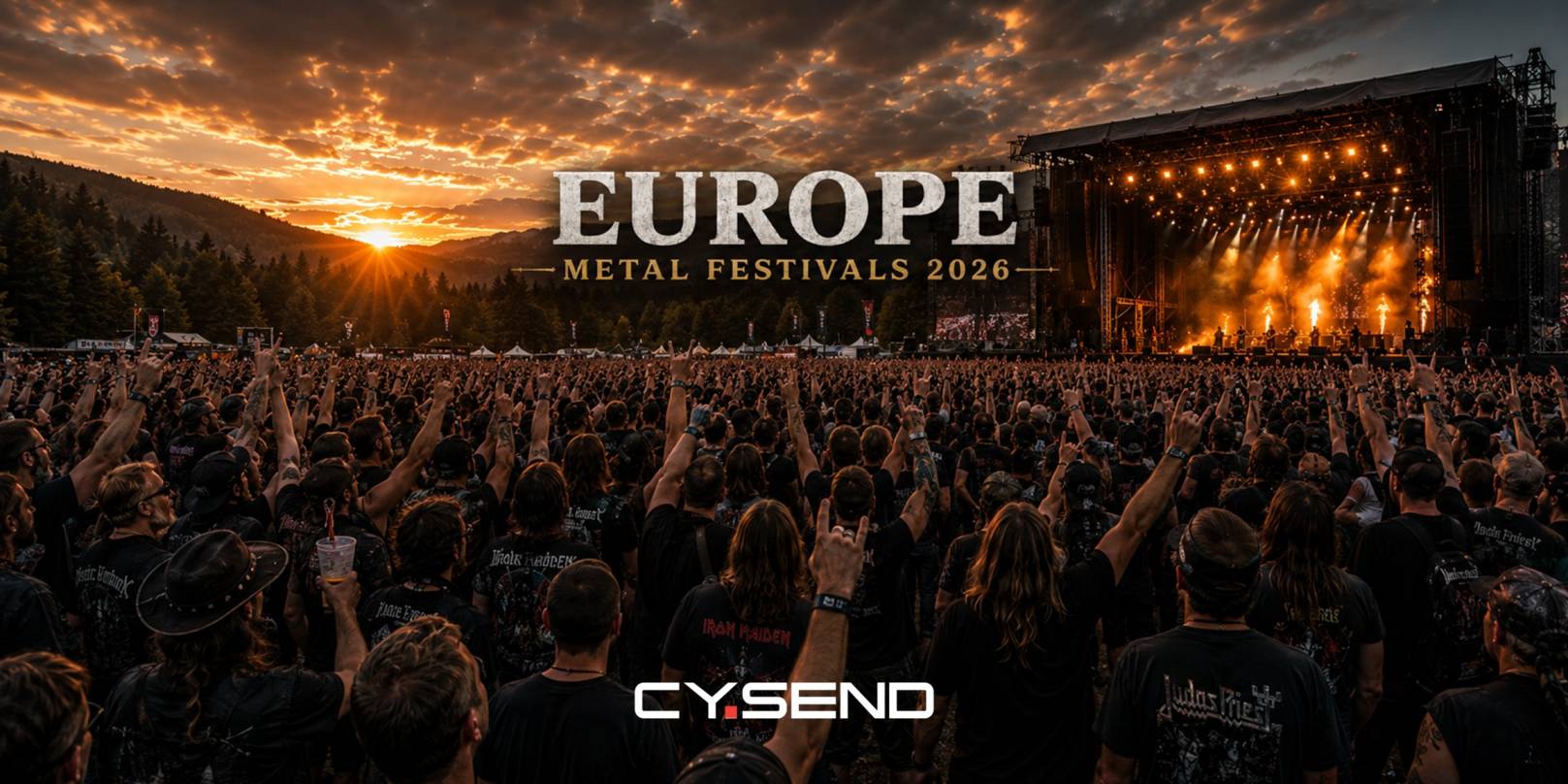
The Viking Route: your guide to Europe’s best heavy metal festivals
There is a moment every metalhead knows. The lights go down, the crowd tightens, the first riff cuts through the air, and suddenly the world outside the festival gates disappears. The office, the inbox, the bills, the long months of waiting: gone. What remains is thunder, mud, smoke, raised horns, battle vests, and thousands of strangers who somehow feel like your people.
Europe’s heavy metal festivals are more than music events, they are yearly pilgrimages. For some fans, the journey begins with a flight across the ocean. For others, it starts with loading a car, a campervan, or a backpack with enough black shirts to survive a small apocalypse. However you travel, the feeling is the same: you are leaving ordinary land behind and sailing toward louder shores.
That is the spirit of The Viking Route. Not a fixed road on a map, but a way to experience Europe’s strongest heavy metal festival season as a modern metal voyage. From the massive fields of Germany and Belgium to the industrial docks of Copenhagen, the medieval towns of Central Europe, and the Nordic atmosphere of Norway and Finland, this route lets you build a summer around riffs, road stories, camp life, and the kind of brotherhood that only metal can create.
This guide follows the full journey: planning the route, choosing the right festivals, preparing your transport, surviving the campgrounds, packing like a pro, and finally dealing with that strange post-festival emptiness every metalhead understands when the wristband is still on your arm but real life has already returned.
Planning the ultimate European metal festival road trip
A great European metal festival trip starts long before the first band walks on stage. It starts with the calendar. June, July, August, and early September can become a full campaign if you plan carefully, because many of Europe’s major festivals happen close enough to each other to combine into one extended summer route.
Before you book anything, decide what kind of metal journey you want. Do you want the giant festival experience with huge stages, massive crowds, and legendary headliners? Do you want a darker, more underground route focused on black metal, death metal, doom, and extreme subgenres? Or do you want a balanced trip that mixes iconic names with smaller regional discoveries?
For a broader seasonal view, use a general festival calendar as your first map, then build the metal route around the dates that matter most to you. A useful internal reference is summer festival calendar for Europe and the Americas, which can help you understand how metal festivals fit into the larger summer travel season.
The Viking Route is not only about attending as many festivals as possible, it is about pacing the experience. A festival weekend can be physically intense: long walks, loud stages, late nights, sun, rain, mud, queues, crowds, and very little sleep. If you are coming from outside Europe, leave recovery days between major stops. A day in a hotel, a quiet train ride, a proper shower, and a real bed can be the difference between returning to the pit strong or dragging yourself through the next festival like an undead roadie.
Choosing your route
The most practical way to design The Viking Route is to start by region. Western and Central Europe offer the densest cluster of major festivals. Germany, Belgium, France, Denmark, the Czech Republic, and the Netherlands are relatively well connected by train, bus, and road. That makes them ideal for travelers who want to visit more than one festival in a single trip.
A classic route can begin in June with the great northern and western gatherings: Hellfest in France, Graspop Metal Meeting in Belgium, and Copenhell in Denmark. From there, the route can move through July toward Germany, Czechia, Slovenia, or Spain, depending on your preferred lineup and budget. By late July and August, the journey can reach Wacken Open Air, Brutal Assault, Alcatraz Open Air, Bloodstock, Summer Breeze, or even a Nordic extension toward Tuska and Midgardsblot.
If you are flying into Europe, choose an arrival city that gives you flexibility. Paris, Brussels, Amsterdam, Frankfurt, Hamburg, Copenhagen, Munich, Vienna, and Prague can work well depending on your target festivals. For a car or campervan route, Germany is often a strong base because many major festivals are either in Germany or reachable from Germany within a reasonable drive. For a rail-heavy route, look at how close each festival is to a major station and whether the festival offers shuttles from the nearest city or train stop.
Also think about the emotional rhythm of the journey. Starting with a giant festival like Hellfest or Graspop throws you directly into the fire. Ending with Wacken gives the route a mythical finale. Ending with Midgardsblot gives it a more atmospheric, almost ritual closing chapter. The right route depends on whether you want your final memory to be a massive main-stage eruption or a darker Nordic night by the old gods’ fire.
Festival logistics: tickets, camping, and survival gear
Metal festival logistics can be as brutal as a blast beat if you leave them too late. The biggest events often sell out quickly, and accommodation near festival towns can disappear months in advance. Buy from official sources whenever possible, avoid suspicious resale offers, and always check whether your ticket includes camping, shuttle access, parking, or only festival entry.
This point matters because camping rules vary widely. At Wacken Open Air, camping and access to campground facilities are included with the main festival ticket, which is one reason the event feels like a full temporary metal city. At other festivals, camping may be limited, located off-site, or sold separately. Alcatraz Open Air, for example, requires campers to purchase a separate camping ticket for the campsite. Other urban festivals may not offer traditional camping at all, which means you need a hotel, hostel, apartment, or transport plan for late-night returns.
Flights also deserve early attention, especially if you are traveling from the Americas, Asia, Africa, or the Middle East. Festival dates overlap with peak European summer travel, so prices can rise fast. Before booking, compare arrival airports, nearby train connections, baggage allowance, and whether your camping equipment is easier to buy locally than to fly with. For a wider logistics overview, read summer music festivals 2026 travel guide: flights, budgeting, and logistics.
Your survival gear should match the festival style. For camping festivals, consider tents, lightweight blankets, camping mattresses, foldable chairs, compact towels, reusable water bottles, power banks, rain ponchos, sunscreen, and waterproof bags. For festivals known for mud or sudden storms, plastic rain boots or strong waterproof hiking boots are worth the space. If you are traveling by car or campervan, gift cards for automotive products, fuel, repair accessories, roadside essentials, supermarkets, and sports or outdoor retailers can be useful for buying local supplies without carrying everything across borders.
CY.SEND users can look for country-specific digital gift cards before the trip and match them to the places where they will actually shop. For example, outdoor and sports retailers can help with tents, sleeping mats, boots, backpacks, and weatherproof clothing; grocery cards can help with snacks and non-perishable food; automotive and fuel-related cards can support travelers using a car or campervan; and health and beauty retailers can cover hygiene, sunscreen, toiletries, and basic self-care.
Essential heavy metal festivals on the Viking route
The Viking Route is not about one single festival. It is a chain of strongholds. Each stop has its own atmosphere, tribe, weather, rituals, and legends. The route below follows the summer campaign from June into August and early September, with three major stops for each phase of the season.
June: Hellfest, Graspop Metal Meeting, and Copenhell
Hellfest in Clisson, France is one of the great temples of extreme music. It is massive, visually spectacular, and famous for treating metal, punk, hardcore, hard rock, and extreme subgenres with the scale usually reserved for mainstream mega-festivals. For many fans, Hellfest is the first horn raised in the European summer campaign: a fiery gate into the season where the stages feel like monuments and the crowd arrives ready for war chants, circle pits, and long nights under the French sky.
Graspop Metal Meeting in Dessel, Belgium is another essential June fortress. It combines the weight of classic heavy metal and hard rock with modern metalcore, death metal, black metal, thrash, industrial, and alternative heavy sounds. Its location in Belgium makes it especially attractive for travelers building a multi-country route, because it can connect naturally with the Netherlands, Germany, France, or Denmark. For international metalheads, Graspop is a practical and powerful stop: big enough for legendary headliners, but still deeply rooted in the European festival tradition.
Copenhell in Copenhagen, Denmark adds a different flavor to the route. Set in an urban, industrial environment, it feels like a metal invasion of the city itself. Copenhagen is easy to reach, easy to navigate, and ideal for travelers who want a festival experience without fully committing to remote countryside camping. Copenhell also works beautifully as a northern bridge: after France and Belgium, it pulls the route toward Scandinavia, where the Viking imagery stops being metaphor and starts becoming landscape, history, and atmosphere.
July: Rockharz, Masters of Rock, and Tolminator
Rockharz in Ballenstedt, Germany is a strong July choice for fans who want a more scenic German festival experience. Located near the Harz Mountains, it offers a different mood from the vast northern fields. It is a good reminder that the European metal scene is not only about the biggest names; it is also about regional character, loyal crowds, and festivals where the landscape becomes part of the memory.
Masters of Rock in Vizovice, Czech Republic brings the route deeper into Central Europe. It is especially attractive for fans of power metal, symphonic metal, classic heavy metal, melodic metal, and big singalong moments. Czechia is also a practical destination for travelers watching their budget, with strong beer culture, beautiful towns, and good rail connections. After the northern roar of June, Masters of Rock can feel like a different chapter: less like storming a fortress, more like gathering in an old continental stronghold where melody and heavy riffs carry the banners.
Tolminator in Tolmin, Slovenia gives the July route a wilder, more nature-driven edge. Slovenia’s mountain and river landscapes create a festival atmosphere that feels far removed from the industrial or agricultural settings of other events. For travelers who want metal combined with outdoor scenery, this kind of stop can become one of the most memorable parts of the journey. It also gives the route a sense of exploration: the feeling that you are not only chasing bands, but discovering new terrain.
August and September: Wacken, Brutal Assault, Alcatraz, Summer Breeze, and Midgardsblot
Wacken Open Air in Germany is the holy ground. Even people outside the metal scene know the name. The village becomes a temporary kingdom of black shirts, camp flags, muddy boots, and global metal unity. Wacken is not only about who plays; it is about the entire world that appears around the festival. The campgrounds, the village, the shuttles, the food stands, the rain stories, the battle vests, the first-time visitors, the veterans who have attended for decades: all of it forms the myth. If The Viking Route needs a capital, Wacken is it.
Brutal Assault in Jaroměř, Czech Republic is one of Europe’s strongest extreme metal experiences. Set in the historic Josefov Fortress, it gives death metal, black metal, grindcore, doom, sludge, hardcore, and experimental heavy music a setting that feels almost designed for dark sound. The fortress walls, tunnels, and military architecture make the festival feel like a siege of sound. For fans who prefer the heavier, darker, more underground side of the scene, Brutal Assault is a key August destination.
Alcatraz Open Air in Kortrijk, Belgium is another powerful August stop. It has grown into a respected European metal gathering with a strong lineup culture and a loyal audience. Because camping is handled separately, it rewards travelers who plan carefully. Alcatraz can work well after Wacken or Brutal Assault, depending on your route, especially if you want to return toward Belgium, France, or the Netherlands before heading home.
Summer Breeze Open Air in Dinkelsbühl, Germany is one of the most beloved German metal festivals for fans who want a strong lineup, efficient organization, and a slightly more manageable scale than Wacken. The nearby medieval town adds charm, while the campsite culture gives the event its own identity. It is a great late-summer choice for travelers who want the German metal experience without making Wacken the only centerpiece.
Midgardsblot in Norway is the atmospheric closing ritual of the route. It is where metal, Norse history, folk culture, dark spirituality, and landscape come together. Compared with the giant festivals, it feels more intimate and ceremonial. If Wacken is the capital of the global metal kingdom, Midgardsblot is the longhouse at the edge of the fjord, where the final songs echo differently. Ending the route here can make the whole journey feel less like a vacation and more like a saga.
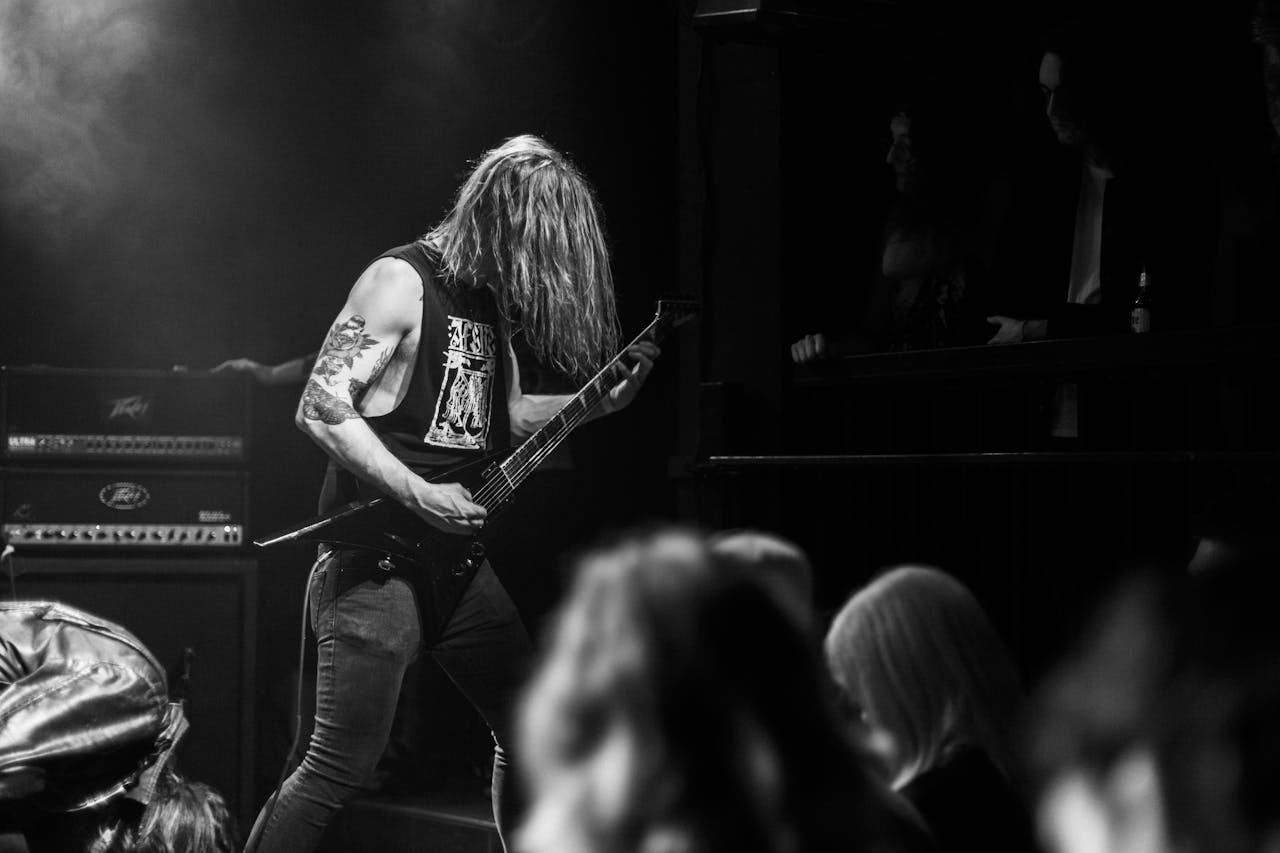
Metal festival survival guide: tips for global travelers
Once the route is chosen, survival becomes the next challenge. A metal festival is joyful, but it is also physically demanding. You may be walking long distances every day, sleeping in a tent, navigating unfamiliar transport systems, eating at odd hours, and trying to keep your phone alive while thousands of others are fighting for the same network signal. The better you prepare, the more energy you save for the bands that matter most.
Navigating European festival logistics and Interrail routes
Europe’s transport network is one of the biggest advantages for global metal travelers. Trains can connect many major cities quickly, and buses can fill the gaps where rail is expensive or inconvenient. Interrail and Eurail passes can be useful if you plan several cross-border trips, especially between France, Belgium, Germany, Denmark, Czechia, Austria, the Netherlands, and surrounding countries.
For rail travel, look at major national and regional operators depending on the countries in your route, such as Deutsche Bahn in Germany, SNCF in France, SNCB/NMBS in Belgium, NS in the Netherlands, ÖBB in Austria, České dráhy in Czechia, DSB in Denmark, and VR in Finland. For long-distance buses, FlixBus is often one of the most practical names for travelers moving between countries or connecting cities at lower cost. A route from the Netherlands to Germany, Belgium to Germany, or Germany to Czechia may be easier by bus if you are carrying camping gear and want direct city-to-city movement.
In the CY.SEND catalog, availability depends on the recipient country and product coverage, but travelers can look for transport-related gift cards and vouchers such as FlixBus vouchers in supported European markets and FlixTrain vouchers where available. These can be useful for fans who want to plan a specific leg of the route, support a friend joining the trip, or manage travel spending country by country. Eurostar train, for several european countries, Kombo vauchers for France and National Express for UK are also availables at CY.SEND.
Always check the last-mile connection. A festival may advertise a nearby city, but the actual site can be in a field, village, fortress, or industrial zone outside the center. Look for official shuttle buses, regional train stops, taxi zones, bicycle routes, and festival partner transport. If the final shuttle runs only at certain hours, missing it after a late arrival can turn a glorious metal pilgrimage into a sweaty march with a tent on your back.
Packing like a pro: weatherproof gear and camp life
Packing for a European metal festival means preparing for three enemies: rain, heat, and exhaustion. The weather can shift from burning sun to battlefield mud in one afternoon. Your best armor is not the most expensive outfit; it is practical gear that keeps you dry, rested, hydrated, and mobile.
- Start with shelter. A reliable tent, a compact camping mattress, a lightweight sleeping bag or blanket, and a waterproof groundsheet are essential for camping festivals. Add a small camping pillow if you value your neck after three nights of headbanging. For footwear, bring broken-in boots, not brand-new ones. A beautiful new pair of boots can become a torture device after 20,000 steps, while a trusted pair can carry you from the campsite to the main stage and back like a loyal warhorse. You can purchase all these items with the Decathlon gift cards, available for several countries in Europe.
- Groceries are another key category. Packaged snacks, cereal bars, nuts, crackers, instant meals, and other non-perishable food can save money and rescue you when queues are long. However, always check each festival’s rules before bringing food or drinks inside the arena. Some festivals allow food only in camping areas, some limit containers, and many restrict glass, cooking equipment, alcohol, or large quantities of outside supplies.
- Health, hygiene, and beauty products may not sound very metal until day three, when everyone around you smells like smoke, sunscreen, beer, rain, and heroic mistakes. Small-format toiletries are your allies: sunscreen, lip balm, shampoo, soap, toothbrush, toothpaste, deodorant, wet wipes, hand sanitizer, tissues, blister plasters, basic pain relief, and any personal medication you require. And yes, metalheads with legendary hair should protect the mane: dry shampoo, a small comb, hair ties, and a compact towel can keep your hair from becoming a tragic knot after rain, sweat, and wind.
- Mobile top ups and internet. Living in a festival campsite for days—or embarking on a multi-week road trip across different European borders—means keeping your mobile device active is an absolute safety and social necessity. When international roaming or local data plans start running low while you are deep in the muddy fields of Germany or the fjords of Norway, platforms like CY.SEND make it incredibly simple to manage your connectivity. Through reliable global mobile top-ups, you can instantly recharge your own prepaid SIM card or send data credits to your festival crew. It ensures that no matter how remote the holy grounds are, you can always upload your favorite mosh pit videos, locate your friends in a dense crowd, and reassure your family back home that you are safe and sound within the brotherhood of metal.
For responsible adult travelers, condoms are also a practical item to pack. Festivals are social spaces, and the smartest approach is to be respectful, prepared, and mindful of consent and safety. Keep them discreetly with your personal essentials, just like medication, earplugs, or ID.
Useful CY.SEND catalog categories for this part of the trip may include groceries, supermarkets, pharmacies, health and beauty, sports and outdoor equipment, clothing, footwear, electronics, mobile top-up, fuel, automotive, and general shopping gift cards. Availability changes by country, so the safest approach is to search the catalog by destination. A grocery card in Belgium, a sports retailer card in Germany, a pharmacy card in France, or a mobile top-up for your European SIM can be much more useful than carrying every possible item from home.
Do not underestimate mobile connectivity. You will need your phone for tickets, maps, transport apps, meeting friends, emergency contacts, payments, photos, and finding your tent in a field that suddenly looks identical in every direction. Bring a strong power bank, download maps offline, save screenshots of tickets and shuttle instructions, and consider a local mobile top-up or data option for the countries you will visit.
Embracing the metal community: safety and brotherhood
The outside world often misunderstands metal festivals, it sees the black clothing, the roaring vocals, the pits, the flames, and the aggressive sound, then assumes danger. But anyone who has lived the scene knows the truth: metal can look rough from the outside while being deeply protective on the inside.
The clearest example is the pit, a mosh pit or wall of death may look chaotic, but it has rules. If someone falls, you pick them up, if someone loses a shoe, glasses, phone, or wallet, people often form a circle and help recover it. If someone looks hurt, exhausted, or overwhelmed, the crowd makes space. That code is not written on a ticket, but it is one of the most powerful traditions in the community.
That same spirit appears in the campgrounds. Someone will lend you a mallet, someone will help fix a tent. Someone will share coffee, directions, a phone charger, sunscreen, or a story about the best set they ever saw. Solo travelers often arrive nervous and leave with a group chat full of new friends from five countries. The metal community is not perfect, and normal safety awareness still matters, but its sense of mutual care is real.
One of the greatest joys of The Viking Route is the mix of legends and discoveries. You may travel across Europe to see the band that changed your life, the one whose lyrics carried you through hard years or whose riffs made you pick up a guitar. But between those legendary sets, you may stumble upon a local band on a smaller stage and leave with a new obsession. That is part of the magic: the route honors the giants, but it also keeps the underground alive.
And then, after all the planning, the flights, the trains, the mud, the sunburn, the camp breakfasts, the late-night walks, the final encore arrives, the last chord fades, the crowd roars one more time, the lights come up. You return to the tent, the hotel, the bus, or the airport with a wristband you do not want to cut off yet.
That is when post-festival depression hits: not as a clinical term, but as that familiar metalhead emptiness after the storm. For days, you still hear riffs in your head. Your boots are dirty, your voice is destroyed, your body wants sleep, but your soul wants one more set. Normal life feels too quiet, the inbox feels absurd, the supermarket feels painfully non-metal.
But that emptiness is also proof that the journey mattered, you were there. You sang with strangers, you crossed borders. You saw legends, you discovered new bands. You survived the rain, the dust, the queues, the pits, and the long road home. The Viking Route ends, but only for now. Somewhere ahead, another lineup is coming, another ticket sale is opening, another field is waiting, and the tribe will gather again.
Frequently asked questions
What is the best way to travel between different metal festivals in Europe?
The best option depends on your route, budget, luggage, and how many festivals you plan to visit. Trains can work well between major cities, especially with a Eurail or Interrail pass, but remote festival sites may still require shuttle buses, local trains, or taxis. For fans carrying camping gear or following a multi-country “Viking Route,” renting a car or campervan can be practical, but you should compare fuel, parking, tolls, insurance, and cross-border rules before booking.
How much does a trip along the European metal festival route typically cost?
Costs vary widely depending on flights, tickets, camping, hotels, transport, food, and how many festivals you attend. A single festival weekend can cost a few hundred euros before flights, while a multi-week route through Germany, Denmark, Sweden, or Norway can easily reach a much higher budget. Instead of relying on a fixed estimate, plan by category: ticket, accommodation, transport, food, gear, mobile data, emergency funds, and local transport.
Are European heavy metal festivals safe for solo female travelers?
Many European metal festivals have a strong community culture and organized safety measures, but it is better not to describe any large event as automatically safe. Solo female travelers should use the same precautions they would at any major festival: stay aware, secure valuables, avoid isolated camping areas at night, know where medical and security points are, and check whether the event offers awareness teams, safe spaces, or dedicated support services.
Can I buy heavy metal festival tickets on-site, or do I need to buy them in advance?
Buy in advance whenever possible. Major festivals such as Wacken Open Air can sell large numbers of tickets early, and official tickets for 2026 are already available through Wacken’s official ticket channels. For 2026, Wacken Open Air runs from July 29 to August 1, with camping access from July 26 to August 2. Use official ticket shops or verified resale channels to avoid scams.
What should I pack for unpredictable weather at European metal festivals?
Pack for both heat and rain. Essentials include waterproof boots, a rain poncho or jacket, sunscreen, reusable water bottle, earplugs, power bank, basic first-aid kit, blister plasters, warm layers, and dry bags or zip bags for electronics and documents. If camping, choose a tent with good waterproof protection and practice setting it up before the trip.
Is it easy to find vegetarian, vegan, or gluten-free food options at these festivals?
Many modern European festivals offer vegetarian and vegan food, and some also provide gluten-free options. However, availability varies by festival, vendor, and country, so do not assume every dietary need will be covered at every stand. Check the festival’s food information before arrival and bring safe snacks if you have allergies, celiac disease, or strict dietary requirements. CY.SEND has a variety of gift cards that will allow you access to all kinds of restaurants and meals during your Viking route.
What are the rules and etiquette regarding moshing and crowd surfing?
The basic rule is mutual care. If someone falls, help them up. Do not push people who clearly do not want to join the pit, avoid aggressive behavior, and follow security instructions near the barriers. Crowd surfing may be allowed at some festivals and restricted at others, so check the event rules before doing it.
How do I handle phone charging and internet connectivity at remote festival sites?
Bring at least one high-capacity power bank and keep your phone in battery-saving mode when possible. Many festivals offer lockers, charging stations, or paid charging services, but availability can be limited. Mobile networks may become congested in remote areas or during headline sets, so download maps, tickets, shuttle schedules, and meeting points before arriving.
Do I need to speak German, Danish, Swedish, or Norwegian to attend festivals along the Viking Route?
No, but it helps to learn a few basic phrases. English is commonly used at major international festivals, especially by many attendees and some staff, but it is not guaranteed in every local shop, shuttle, campsite, or emergency situation. Save key addresses, transport instructions, and emergency phrases offline.
What unique cultural experiences does Midgardsblot offer compared to mainstream festivals?
Midgardsblot is different because it combines metal, Nordic folk, Viking history, and cultural programming. The festival takes place at Midgard Vikingsenter in Borre, Norway, near one of Northern Europe’s major Viking burial mound areas. Its program has included metal and folk performances, Viking village elements, lectures, reenactments, markets, and other heritage-inspired activities, making it more immersive than a standard open-air metal festival.
Article Number: 3422
Author: May 28, 2026
Last Updated: Jun 12, 2026
Online URL: https://faq.cysend.com/article/the-viking-route-your-guide-to-europe-s-best-heavy-metal-festivals.html