Europe Day: celebrating connection across borders in everyday life
Gifting & Community • Reading time: 1-2 minutes
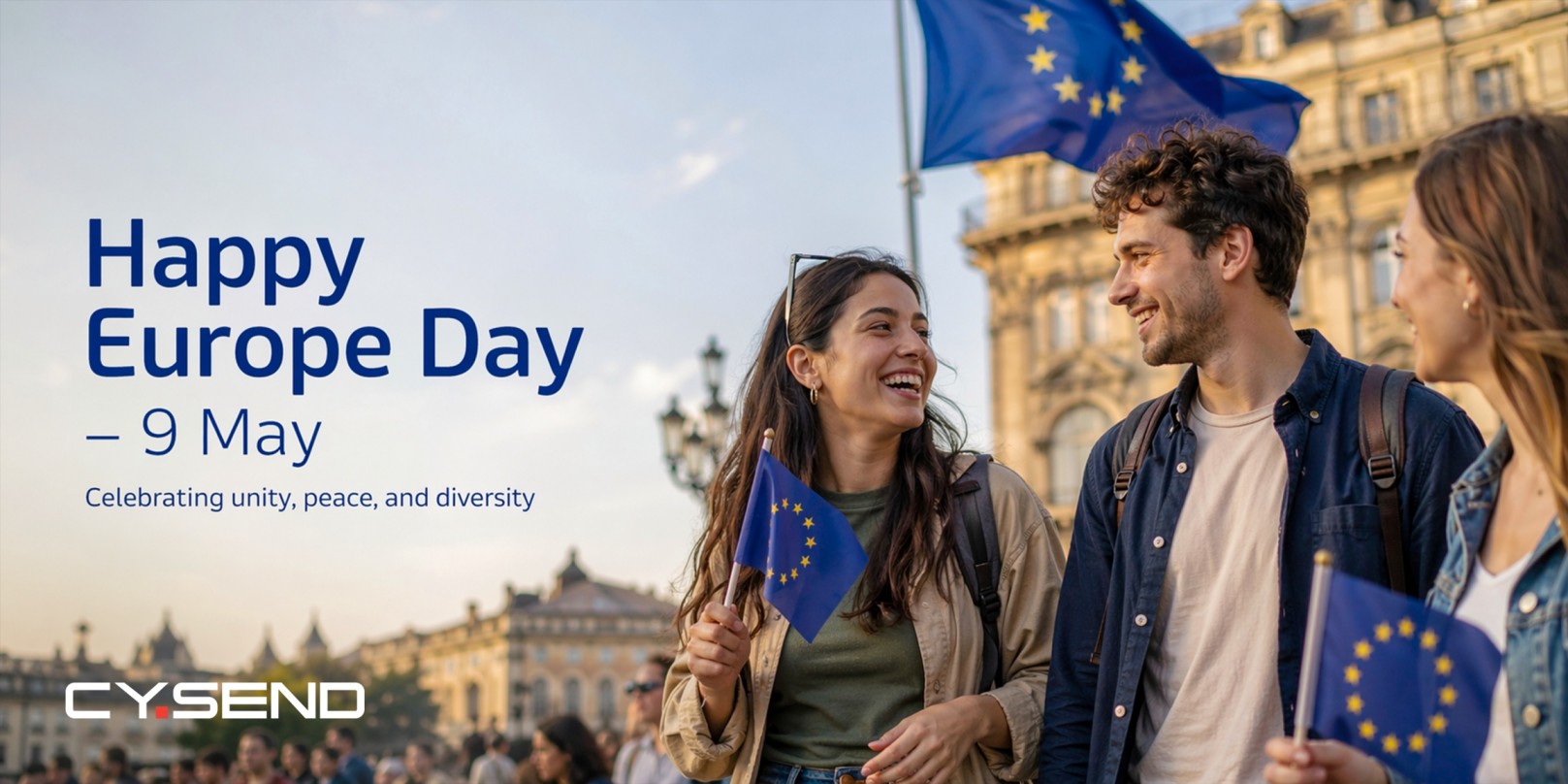
Europe Day is often associated with history, unity, and cooperation. But beyond institutions and flags, it can also be understood in a more personal way: as a reminder of the people who live, study, work, travel, and stay connected across borders every day.
Celebrated every year on May 9, Europe Day marks the anniversary of the Schuman Declaration of 1950, a proposal that helped lay the foundations for today’s European Union. Its original message was built around peace and cooperation, but its meaning continues to evolve with the way people actually live in Europe today.
For many people, Europe is not only a political project or a place on a map. It is a daily reality made of mixed families, international friendships, remote jobs, study programs, weekend trips, migrant communities, and digital lives that rarely stop at national borders. That is why Europe Day can also be a good moment to think about a simpler question: how do we stay close to the people who matter when life takes us to different countries?
Europe Day beyond institutions: a human way to understand connection
The official meaning of Europe Day is rooted in cooperation. On May 9, 1950, French Foreign Minister Robert Schuman presented a plan for deeper European collaboration, beginning with coal and steel production. The idea was practical, but also symbolic: countries that shared essential resources would have stronger reasons to build peace together.
Today, the idea of cooperation is no longer limited to governments or major institutions. It also appears in everyday routines. A student from Spain spends a semester in Germany. A nurse from Portugal works in France. A family in Romania has relatives in Italy. A digital nomad moves between Lisbon, Berlin, Prague, and Barcelona. A football fan travels across Europe for a match. A parent sends support to a child living abroad.
In all these cases, connection is not abstract. It is practical. It can mean being able to call home, pay for transport, access entertainment, buy groceries, continue a subscription, or send a small gift at the right moment. These small actions may not look grand, but they are often the gestures that make distance feel easier.
The modern European experience is cross-border by default
One of the most interesting things about life in Europe today is how normal cross-border living has become. Many people no longer experience one country at a time. They build routines that move between places, languages, currencies, platforms, and services.
A person may live in Belgium, work with a team in the Netherlands, stream content from a global platform, buy a gift for someone in Poland, and plan a weekend trip to Austria. Another person may have moved from Bulgaria to Denmark but still supports family back home with mobile top-ups or digital gifts. For younger generations, this kind of mobility is not exceptional. It is part of how they study, work, travel, and maintain relationships.
That is why Europe Day can be framed in a fresh way: not only as a celebration of unity, but as a celebration of movement and continuity. People move, but their needs move with them. Their families, subscriptions, entertainment, travel plans, and financial habits do not disappear when they cross a border.
A continent of students, workers, travelers, and families
Europe is full of people whose lives are shaped by mobility. Students join exchange programs. Workers relocate for better opportunities. Families live between two or more countries. Travelers move frequently for leisure, sport, culture, or business. Remote workers and freelancers choose cities based on connectivity, affordability, and lifestyle.
For these groups, digital access is not a luxury. It is part of daily life. A mobile top-up can help someone stay reachable while traveling. A food or retail gift card can support a friend who just moved. A gaming card can make a young family member feel remembered from another country. A travel voucher can help someone plan their next visit home.
This is where digital platforms such as CY.SEND can fit naturally into the Europe Day conversation. CY.SEND allows users to buy and send digital products such as mobile top-ups, gift cards, gaming cards, travel vouchers, and other prepaid products across many countries. In the context of Europe Day, these products are not just transactions. They can become small, useful ways to stay connected.
Small digital gestures can carry real emotional value
When people think about cross-border support, they often imagine large money transfers or formal payments. But many meaningful gestures are smaller and more immediate. A prepaid mobile top-up. A supermarket gift card. A gaming voucher. A streaming card. A transport-related product. A digital code sent before a birthday, holiday, exam week, business trip, or family visit.
These gestures work because they are practical. They do not require a long explanation. They simply solve a need or create a moment of joy. For someone living abroad, receiving a digital gift can feel like a reminder that distance has not weakened the relationship.
Europe Day gives these gestures a wider meaning. It invites people to think about connection across borders not as something complicated, but as something they can practice in simple ways. Calling someone. Sending a message. Planning a visit. Helping with a small digital product. Making someone’s day easier from another country.
Examples of useful Europe Day digital gifts
Here are a few natural ways digital products can connect with the spirit of Europe Day:
- Mobile top-ups for relatives, friends, or travelers who need to stay connected while abroad.
- Retail gift cards for someone who recently moved and needs practical everyday items.
- Gaming cards for younger family members living in another country.
- Streaming or entertainment cards for friends who enjoy digital content.
- Travel vouchers for someone planning a trip across Europe or a visit home.
- Food, grocery, or delivery-related gift cards where available, especially for students, workers, or family members abroad.
The key is not to make the gift feel symbolic in a forced way. The best Europe Day gesture is one that is useful, relevant, and personal.
CY.SEND and the Europe Day message
Through CY.SEND, users can explore digital products for different countries and needs, including gift cards, mobile top-ups, gaming cards, shopping cards, travel products, and other prepaid options. For someone with family or friends across Europe, this can be a convenient way to send something useful without dealing with physical delivery, shipping delays, or location restrictions.
The value is especially clear in cross-border situations. A person in France may want to send a gift card to someone in Italy. A parent in Germany may want to top up a phone number for a family member traveling in Spain. A friend in the Netherlands may want to surprise someone studying in Portugal. In each case, the gesture is small, but the intention is clear: “I’m thinking of you, even from another country.”
Why Europe Day is a good moment to talk about digital inclusion
Europe Day is also a good opportunity to talk about access. In modern life, connection depends on more than geography. It depends on mobile data, digital payments, online services, prepaid options, and the ability to access useful products in the right country.
A person may be physically present in one country but still need to support someone in another. A traveler may need mobile credit before arriving. A student may need a flexible way to manage everyday spending. A family may prefer sending a specific digital product instead of cash because it is easier to use for a particular need.
Digital inclusion is not only about having internet access. It is also about having flexible tools that help people participate in daily life, even when they are far from home. Gift cards, prepaid products, and mobile top-ups can support that participation in simple and concrete ways.
Practical connection matters more than symbolic connection
Symbols are important, but practical connection is what people remember. A flag may represent unity, but a mobile top-up sent at the right time can help someone call home. A speech may speak about cooperation, but a digital voucher can help someone prepare for a trip. A celebration may last one day, but a useful gift can support someone’s week.
This does not reduce the meaning of Europe Day. It makes it more accessible. It turns a large idea into something people can understand through their own relationships.
Europe Day ideas for people living across borders
If you want to mark Europe Day in a personal way, you do not need a formal event. You can use the day as a reminder to reconnect with someone who is part of your cross-border life.
- Message a friend you met while traveling or studying abroad.
- Call a family member living in another European country.
- Send a small digital gift to someone who recently moved.
- Help a traveler stay connected with a mobile top-up.
- Share a playlist, film, game, or digital experience with someone abroad.
- Plan a future visit with someone you have not seen in a while.
These ideas are simple, but that is exactly why they work. Europe Day does not have to feel distant or ceremonial. It can become a reminder to maintain the relationships that make cross-border life meaningful.
Europe Day is also about the people who keep Europe connected
Europe Day began with a vision of cooperation after conflict. Today, that vision still matters, but it also lives in smaller everyday actions. It lives in the student calling home, the family supporting relatives abroad, the friend sending a digital gift, the traveler staying connected, and the worker building a life in a new country.
In that sense, Europe Day is not only about institutions. It is about people. It is about the relationships that continue across borders and the practical tools that make those relationships easier to maintain.
CY.SEND fits naturally into this story because it helps people send useful digital products across countries. Whether it is a mobile top-up, a gift card, a gaming card, or a travel voucher, the gesture can be simple, fast, and meaningful.
This Europe Day, the most meaningful celebration may not be a grand statement. It may be a small digital gesture sent to someone who lives, works, studies, or travels somewhere else in Europe.
FAQ: Europe Day, digital gifting, and cross-border connection
1. When is Europe Day celebrated?
Europe Day is celebrated every year on May 9. The date marks the anniversary of the Schuman Declaration, presented on May 9, 1950.
2. What does Europe Day commemorate?
Europe Day commemorates the Schuman Declaration, a proposal for cooperation in Europe that helped lay the foundations for what later became the European Union.
3. How can Europe Day be celebrated in a more personal way?
A personal way to celebrate Europe Day is to reconnect with someone across borders. This could mean calling a friend abroad, sending a thoughtful message, planning a visit, or sharing a useful digital gift.
4. Why are digital gifts relevant for Europe Day?
Digital gifts are relevant because many people in Europe live across borders. A gift card, mobile top-up, gaming card, or travel voucher can be a practical way to support or surprise someone in another country.
5. Can I send a mobile top-up to someone in another European country?
Yes, depending on the destination country and mobile operator available. On CY.SEND, you can select the country and check available mobile top-up options before completing your purchase.
6. Are gift cards country-specific?
Many gift cards are country-specific or region-specific. Always check the product details, currency, country, and redemption terms before buying a digital gift card for someone abroad.
7. What are good Europe Day gift ideas for someone living abroad?
Good options include mobile top-ups, supermarket or retail gift cards, gaming cards, entertainment cards, travel vouchers, and other prepaid digital products that match the recipient’s country and needs.
8. Does the recipient need a CY.SEND account to receive a gift card?
In many cases, digital gift cards are delivered as codes or PINs by email, depending on the product. The recipient should follow the redemption instructions provided with the gift card.
9. Why is Europe Day a good moment to talk about cross-border connection?
Europe Day is connected to cooperation and unity. Today, those ideas can also be seen in everyday life: families, students, workers, travelers, and friends staying connected across countries.
10. How can CY.SEND help people stay connected across Europe?
CY.SEND helps users buy and send digital products such as mobile top-ups, gift cards, gaming cards, travel vouchers, and other prepaid options across many countries. These products can make it easier to support, surprise, or stay close to someone abroad.