Navigating the rush: your essential guide to getting around during the Toronto World Cup
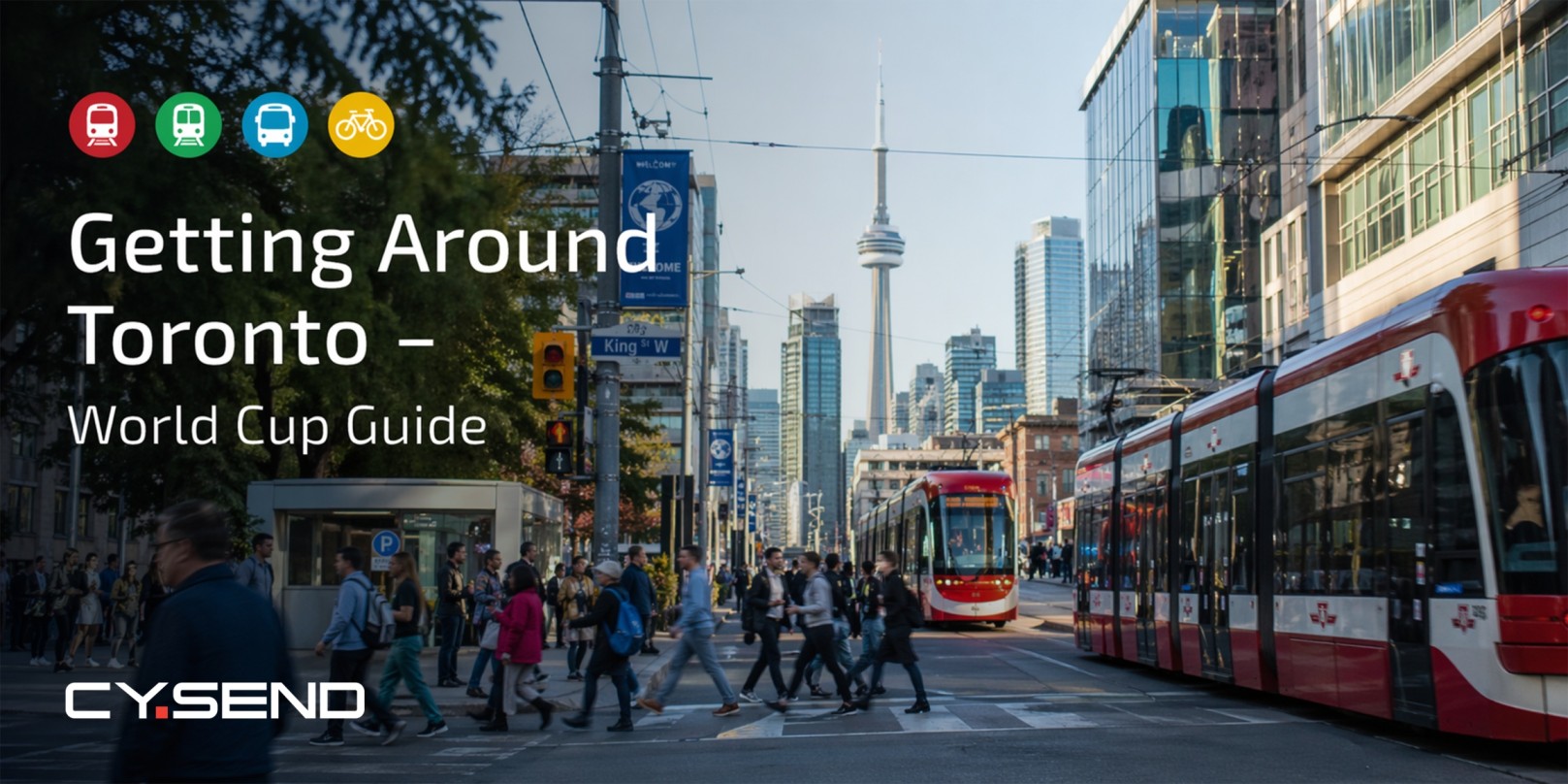
The countdown is on. As one of the proud host cities for the FIFA World Cup 2026, Toronto is gearing up to welcome the world. The energy will be electric, the matches thrilling, and the crowds—immense.
For international fans, the Toronto World Cup experience promises to be unforgettable, but it also presents a logistical challenge: navigating a bustling metropolis unfamiliar with moving millions of extra people in a condensed timeframe.
Toronto is a sprawling, diverse city with a transit system that has its quirks. Mastering how to get from Pearson International Airport to your hotel, and then from the downtown core to the stadium (BMO Field) or the various fan zones, is crucial to enjoying the tournament.
You don't want to miss kickoff because you were stuck in gridlock on the Gardiner Expressway. This guide is your strategic blueprint for mobility in Toronto during the tournament.
We will break down the transit options, the payment systems, and the insider tips to ensure your focus remains on the beautiful game, not on fighting traffic.
The hub: understanding Toronto’s transit anatomy
Before you land, it is vital to understand that Toronto has two primary transit systems that you will likely use. They are distinct entities, and confusing them is a common rookie mistake.
The heart of both systems is Union Station, the massive transit hub located right in the downtown core.
The TTC (The Red Rocket): subways, streetcars, and buses
The Toronto Transit Commission (TTC) is the local urban system. It operates the subway lines, the iconic streetcars that run on surface rails, and an extensive bus network.
The subway is your best bet for moving rapidly north-south (Line 1 Yonge-University) or east-west across the midtown area (Line 2 Bloor-Danforth). It is generally reliable and escapes surface traffic.
Streetcars form the backbone of downtown travel. They are scenic and convenient for short hops between neighborhoods, but be warned: they rarely have dedicated lanes.
During the Toronto World Cup rush, streetcars in the core will be heavily impacted by vehicular traffic and pedestrians.
GO Transit: connecting the Greater Toronto Area
GO Transit is the regional commuter rail and bus service. Think of it as faster, double-decker trains designed to bring people from the suburbs into Union Station.
For World Cup visitors, GO Transit is critical for two reasons. First, if your accommodation is outside the expensive downtown core (in places like Mississauga, Oakville, or Markham), GO is your lifeline to the action.
Second, and most importantly, it is often the fastest way to reach the stadium area from Union Station.
Union Station: the Grand Central of the North
Union Station will be the epicenter of World Cup fan movement. It connects the TTC subway, all GO Transit train lines, the airport express train, and VIA Rail (intercity trains).
Familiarize yourself with its layout; you will likely pass through here multiple times a day.
The stadium route: getting to BMO Field on match day
The stadium, currently known as BMO Field (though likely to be temporarily renamed due to FIFA regulations), is located at Exhibition Place, just west of the downtown core right on the lakeshore.
Getting there on match day requires a specific strategy.
The Exhibition GO Station advantage
This is the pro-tip for getting to the match. The Exhibition GO Station is located immediately adjacent to the stadium grounds.
From Union Station, you can hop on the Lakeshore West GO train line. It is just one stop to Exhibition Station, taking roughly 5 to 7 minutes. This completely bypasses the downtown traffic snarls.
During the tournament, expect GO Transit to run significantly increased service frequencies to handle the crowds.
TTC streetcar options for scenic routes
Several TTC streetcar lines serve Exhibition Place, most notably the 509 Harbourfront (from Union Station) and the 511 Bathurst (from Bathurst subway station).
Under normal circumstances, these are pleasant rides along the water. However, on match days, these streetcars will be packed to capacity and subject to intense traffic delays along Queens Quay and Fleet Street.
Use these only if you have ample time and prefer a surface view of the lake.
Why driving is a rookie mistake: Do not rent a car thinking you will drive to the match. Parking at Exhibition Place will be virtually non-existent for general ticket holders. The surrounding roads will be parking lots. Rely on mass transit.
The payment puzzle: how to pay for transit
Toronto has modernized its transit payment system significantly in recent years, making it easier for international visitors. You do not need to hunt for tokens.
PRESTO contactless and open payment
The primary payment method for both TTC and GO Transit is the PRESTO system.
For short-term visitors, the easiest option is "Open Payment." You can simply tap your contactless credit card (Visa, Mastercard, Amex) or a mobile wallet (Apple Pay, Google Pay) directly on the readers.
The system automatically calculates your fare. On the TTC, it provides a two-hour transfer window, allowing you to hop between subway, streetcar, and bus on a single fare.
Managing transit funds with CY.SEND
While tapping your home credit card is easy, international transaction fees can add up quickly with multiple taps per day.
A smart alternative is to use prepaid solutions to manage your on-the-ground spending. You can purchase digital gift cards that can be loaded into mobile wallets to budget your transport costs.
If you are supporting family members visiting for the tournament, you can easily send digital gift cards for major payment platforms directly to their phones before they arrive in Toronto via CY.SEND.
The airport connection: Pearson (YYZ) to downtown
Your Toronto World Cup journey begins at Toronto Pearson International Airport (YYZ). You need a fast, reliable route to your hotel to drop your bags and start soaking up the atmosphere.
The UP Express (Union Pearson Express)
This is the gold standard for airport transfers in Toronto. The UP Express is a dedicated rail link connecting Pearson Airport (Terminal 1) directly to Union Station downtown.
It departs every 15 minutes and the journey takes exactly 25 minutes. It is comfortable, has ample luggage racks, and offers free Wi-Fi. It is immune to the notorious traffic on Highway 421.
Taxis and ride-shares: what to expect
Taxis offer flat rates from the airport to downtown, usually around $60-$70 CAD. Ride-shares like Uber and Lyft are readily available, but prices fluctuate wildly based on demand.
During the World Cup rush, expect high surge pricing and potentially long travel times due to highway congestion.
Staying connected: mobile data for maps and transit apps
Navigating a new city’s transit system without real-time data is nearly impossible. You will need Google Maps, Citymapper, or the official Transit app to check schedules and delays.
Relying on patchy public Wi-Fi is not a viable strategy. Ensure your phone is unlocked and ready for a local eSIM or SIM card.
If you run out of data mid-tournament, you can instantly top up your mobile data using CY.SEND, ensuring you never lose your connection to vital navigation tools.
You can also recharge your phone or purchase international credits through the CY.SEND catalog to stay in touch with fellow fans.
Beyond the pitch: navigating fan zones and nightlife
The World Cup isn't just about the stadium; it's about the city-wide celebration. Toronto's official FIFA Fan Festival will likely be centrally located at a major venue like Nathan Phillips Square.
Most major downtown attractions, including the CN Tower and the Entertainment District, are walkable from Union Station.
Toronto also has "The PATH," the world's largest underground shopping complex, which connects many downtown hotels and office towers to Union Station.
For more ideas on what to explore in the city outside of match times, check out resources like Destination Toronto, the city's official tourism site.
Comparative table: Toronto transit options at a glance
| Transit mode | Best for... | Payment method | World Cup status |
|---|---|---|---|
| UP Express | Airport to downtown. | Contactless tap. | Essential; traffic-free. |
| GO Transit train | Getting to the stadium. | Tap ON and OFF. | Fastest match-day route. |
| TTC subway | Long-distance city travel. | Tap ON only. | Very busy; efficient. |
| TTC streetcar | Short downtown hops. | Tap ON only. | Expect heavy traffic delays. |
| Ride-share | Late-night trips. | In-app payment. | Extreme surge pricing. |
| Walking | Immediate downtown core. | Free. | Often fastest during gridlock. |
Last-minute jersey shopping in the host city
Planning your match-day outfit before traveling can save time, especially when popular jerseys sell out close to major games. From official brand stores to sports retailers and gift card-friendly options, comparing where to shop can help fans find authentic gear more easily before arriving in the host city.
But if you arrive in Toronto without your national team jersey, Fanatics Canada can be a practical option to check for official fan gear, jerseys, hats, scarves, and other football-related merchandise depending on availability. Since tournament stock can move quickly around match days, it is worth checking sizes and delivery or pickup options in advance. CY.SEND users can also buy Fanatics gift cards for Canada and use them toward eligible purchases where supported.
Frequently asked questions: Toronto World Cup transport
Is public transit free with my World Cup match ticket?
This has not been clearly confirmed for Toronto 2026 yet. For now, assume you will need to pay for TTC, GO Transit, or UP Express separately unless FIFA, the City of Toronto, TTC, or Metrolinx announce a special matchday policy. TTC’s World Cup information currently focuses on tapping with PRESTO, debit, credit, or mobile wallet, not free transit with a match ticket.
Can I walk from downtown Toronto to the stadium?
Yes, depending on where you start. From the downtown core or Union Station area, walking to Exhibition Place is possible but long, so plan for around 45–60 minutes and expect crowds on match days. For most visitors, GO Transit to Exhibition GO Station or TTC streetcar service will be easier. GO Transit notes that Toronto Stadium at Exhibition Place is close to Exhibition GO Station.
Do I need to buy a physical PRESTO card?
Not necessarily. Short-term visitors can tap a contactless debit card, credit card, PRESTO card, PRESTO Ticket, or PRESTO in Mobile Wallet on the TTC. Contactless debit or credit card payments are charged the adult single-ride PRESTO fare, but discounted fares for youth, seniors, or other eligible riders may still require the proper PRESTO setup.
How late does the subway run?
TTC subway service generally ends around 1:30 AM. After that, the Blue Night Network operates on many major routes, usually every 30 minutes or better, until regular subway service resumes.
Is it safe to use the TTC at night?
Generally, yes, but use normal big-city precautions. Stay aware of your surroundings, keep your phone charged, follow official event signage, and travel with other fans when possible. During World Cup match days, transit areas are likely to be busier than usual, but crowds do not remove the need for basic safety awareness.
Can I use US dollars to pay for transit?
No, not directly. Toronto transit does not accept US cash for fares. Use Canadian payment methods, a PRESTO option, or a contactless debit/credit card that supports international payments and currency conversion.
Will ride-shares be allowed near the stadium?
Expect restrictions. Toronto’s World Cup mobility planning is expected to rely heavily on public transit, walking, and cycling rather than driving or ride-sharing near the stadium. There may be designated pick-up and drop-off areas, but they could be located away from the stadium perimeter, so check official matchday guidance before you go.
Are the trains accessible for wheelchairs and strollers?
GO Transit and UP Express trains are designed to support accessible travel, and TTC buses are accessible. Many TTC subway stations have elevators, but not every station may be fully accessible at all times, especially if an elevator is temporarily out of service. Check accessibility status before traveling on match day.
What if my phone dies and I am using Apple Pay or Google Pay for transit?
You may not be able to tap, transfer, or show proof of payment. Carry a backup physical payment method, such as a contactless credit/debit card or a loaded PRESTO card, especially on match days when stations and vehicles will be crowded.
Where can I get help if I am confused at Union Station?
Look for uniformed transit staff, station signage, customer service desks, or official World Cup wayfinding signs. For route planning, use official TTC, GO Transit, UP Express, or PRESTO information before you travel.