Cinco de Mayo: celebrating culture and staying connected with loved ones in Mexico
Gifting & Community • Reading time: 1-2 minutes
When May rolls around, thoughts often turn to vibrant parades, the sound of mariachi music, and the savory aroma of tacos and mole. Cinco de Mayo has become a widely recognized cultural touchstone, particularly in the United States, celebrated with enthusiasm and plenty of margaritas.
However, amidst the festivities, the true meaning of the date is often obscured. There is a widespread misconception that Cinco de Mayo is Mexico's Independence Day. It is not. That distinction belongs to September 16th.
Instead, the "Fifth of May" commemorates a specific, unlikely military victory that has evolved into a broader celebration of Mexican heritage and pride. For those living far from their roots, it is also a poignant time to connect with family and friends back home, bridging the geographical divide to share in the spirit of the occasion.
Unpacking the history: what the date actually celebrates
To truly appreciate Cinco de Mayo, we must look back to 1861. Mexico was facing a severe economic crisis, forcing President Benito Juárez to suspend debt payments to foreign powers. While Spain and Britain eventually negotiated, France, ruled by Napoleon III, saw an opportunity to establish a dependent empire in Mexican territory.
In late 1861, a well-armed French fleet stormed Veracruz, landing a large force and pushing toward Mexico City. The French army was considered one of the best in the world at the time, vastly superior in numbers, training, and equipment to the Mexican forces.
The miracle at Puebla
On May 5, 1862, the French army arrived at the city of Puebla. Expecting an easy victory, they attacked. The Mexican defense, led by General Ignacio Zaragoza and aided by indigenous Zapotec and Mixtec volunteers, was vastly outnumbered and poorly supplied.
Against all odds, the Mexican forces repelled repeated French assaults. The Battle of Puebla lasted from daybreak until early evening, ending with the French retreating having suffered heavy losses. While the French did eventually take Mexico City a year later, the victory at Puebla was a massive symbolic boost to Mexican morale and resistance.
For a deeper historical dive into the military tactics and geopolitical implications of that day, authoritative sources can provide extensive details on the Battle of Puebla.
Why it resonates in the United States
Interestingly, Cinco de Mayo is often celebrated more intensely in parts of the US than in Mexico itself outside of Puebla. News of the victory against the French—who were sympathetic to the Confederacy during the American Civil War—was greeted with joy by Latinos in California in 1862.
Later, during the Chicano Movement of the 1960s and 70s, Mexican-American activists adopted the holiday as a symbol of indigenous resistance against imperialism and a beacon of cultural pride. It transformed from a historical commemoration into a broader celebration of Mexican-American identity.
Modern celebrations: how the world marks the day
Today, the way Cinco de Mayo is celebrated varies significantly depending on where you are. It is not a federal holiday in Mexico, so for many Mexicans outside of Puebla, it is a regular workday.
In the state of Puebla, however, the date is marked with significant fanfare. The city hosts military parades, battle reenactments in original costumes, and colorful cultural festivals featuring traditional dancing and food.
In the United States, the holiday has taken on a life of its own. Cities with large Mexican-American populations, such as Los Angeles, Chicago, and Houston, host massive street festivals. These events showcase mariachi performances, folklorico dancers, and an abundance of traditional cuisine, serving as a vibrant display of heritage for the diaspora community.
Bridging the distance with family abroad
For Mexicans living abroad, holidays like Cinco de Mayo can evoke a sense of nostalgia. While they may participate in local celebrations in their new host countries, their thoughts often turn to family remaining in Mexico.
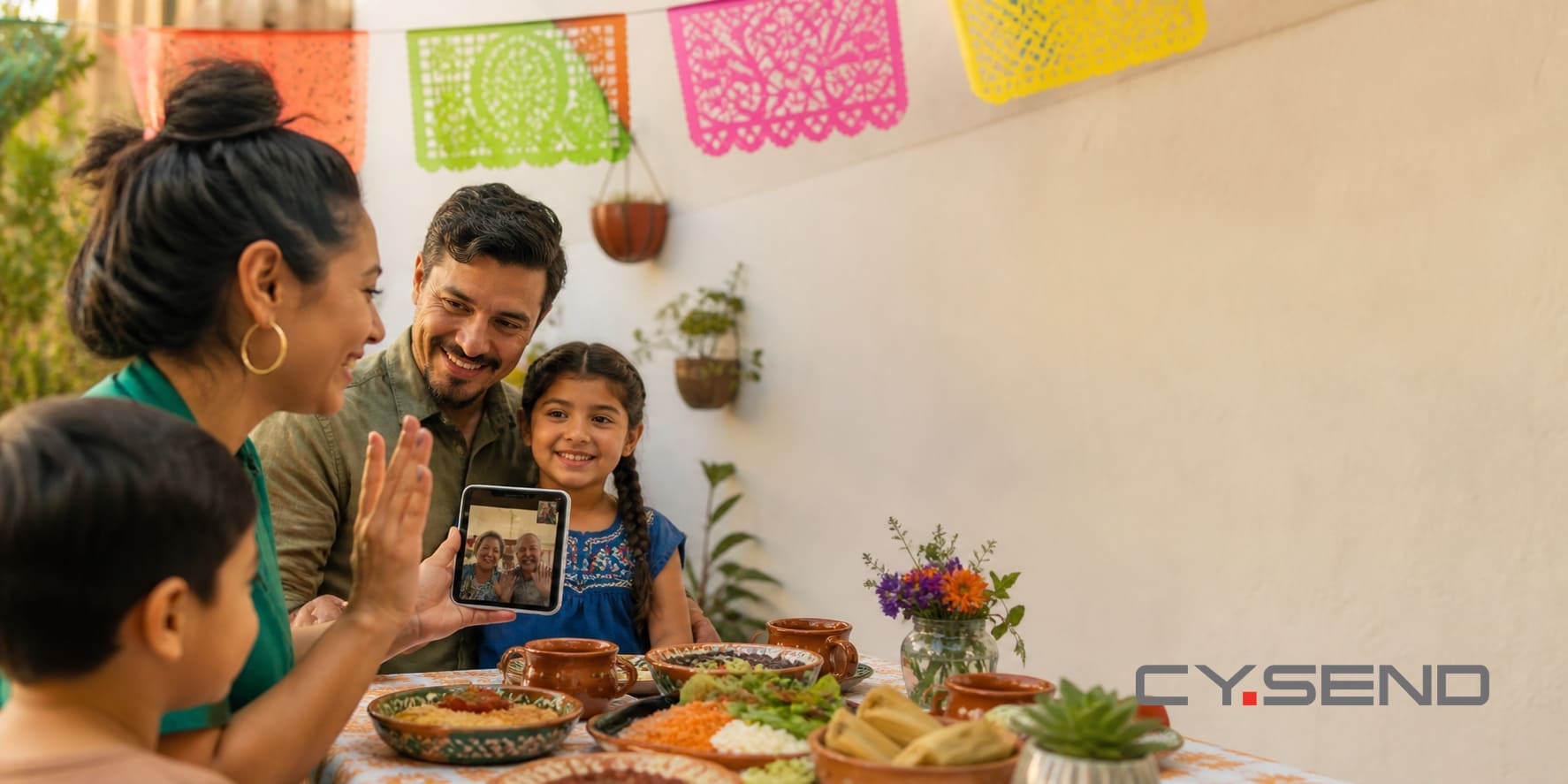
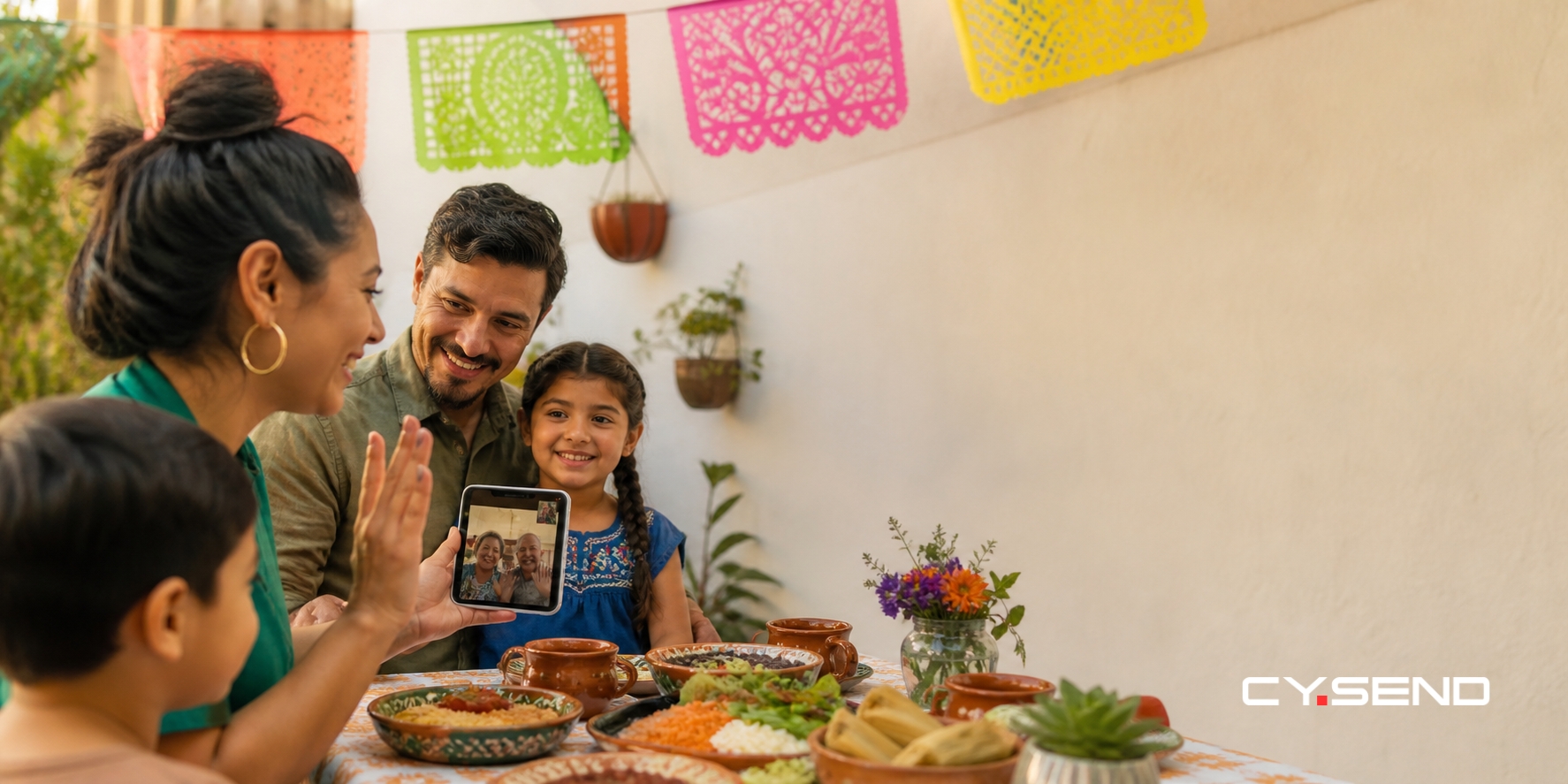
Maintaining strong connections with loved ones is a cornerstone of the expatriate experience. Participating in the celebration remotely, even in small ways, helps keep cultural bonds strong across international borders. Technology has made it easier than ever to be "present" for the fiesta, whether through video calls during a family gathering or by sending support to help fund the celebration back home.
Practical ways to support loved ones in Mexico for the fiesta
When you can't be there in person to share a meal, sending practical support is a meaningful way to contribute to the festivities in Mexico. CY.SEND specializes in facilitating these instant cross-border connections.
Keeping the lines open
Communication is vital during holidays. The simplest way to ensure your family can reach out and share the moments of the day is by topping up their mobile phones.
In Mexico, the mobile market is dominated by major players. You can easily send a recharge to a Telcel phone in Mexico via CY.SEND, ensuring your relatives have the data and call credits they need to video chat or send photos of local celebrations. We also support other major Mexican carriers like Unefon, AT&T Mexico, Movistar, Bait and Flash Mobile, providing instant connectivity regardless of their network.
Contributing to the feast
A proper celebration requires food and supplies. Instead of sending cash, which can sometimes be complicated to pick up, digital gift cards offer immediate utility.
Through CY.SEND, you can purchase gift cards for major retailers operating in Mexico. These can be used for groceries to prepare a family feast, purchase new clothes for a parade, or buy supplies for a neighborhood gathering. By exploring our supported services in Mexico, you can find the right way to contribute directly to their celebration budget, ensuring they can enjoy the day without financial stress.
Comparing Cinco de Mayo and Mexican Independence Day
Because the confusion between these two holidays is so prevalent, it is helpful to clearly outline the differences. While both involve national pride, their historical roots are entirely distinct.
| Feature | Cinco de Mayo | Mexican Independence Day |
|---|---|---|
| Date | May 5th | September 16th |
| Historical Event | Victory at the Battle of Puebla (1862) against French forces. | The "Grito de Dolores" (1810), marking the start of the war for independence from Spain. |
| Status in Mexico | Not a federal holiday. Primarily celebrated in the state of Puebla. | The most important national holiday. A federal holiday celebrated nationwide. |
| Primary Significance | Symbolic victory of underdog forces; resistance to foreign intervention. | The birth of the nation and freedom from Spanish colonial rule. |
| Major Celebrations | Military parades in Puebla; large cultural festivals in the USA. | Massive nationwide parades, fireworks, and the presidential reenactment of "El Grito" in Mexico City. |
The evolution: from battleground to cultural touchstone
The journey of Cinco de Mayo from a dusty battlefield in 1862 to a global celebration of Mexican culture is remarkable. It highlights how diaspora communities hold onto their history and reshape it to fit their new contexts.
While some criticize the commercialization of the holiday in the US, it remains an important opportunity for cultural exchange. It is a day when Mexican culture—its music, cuisine, and resilience—is highlighted on a global stage. For Mexican-Americans, it is a day to assert their presence and celebrate their dual heritage.
Understanding the true history adds depth to the celebration. It transforms the day from merely an excuse for margaritas into a recognition of a moment when a determined defense overcame a superior force—a narrative that resonates universally.
Whether you are raising a glass in Chicago, watching a parade in Puebla, or just sending a quick mobile top-up to your cousin in Mexico City so they can tell you about their day, Cinco de Mayo is about connection. It’s about remembering the past, celebrating the present culture, and ensuring that physical distance doesn't break family ties. CY.SEND is proud to help facilitate those essential connections, making the world feel a little smaller when it matters most.
Frequently asked questions
1. Is Cinco de Mayo the most important holiday in Mexico?
No. Mexican Independence Day (September 16th), Day of the Dead (Dia de los Muertos), and Christmas are generally considered more significant national holidays in Mexico than Cinco de Mayo.
2. Do schools in Mexico close for Cinco de Mayo?
Generally, no. It is not a compulsory federal holiday in Mexico, so schools, banks, and government offices usually remain open, except perhaps in the state of Puebla.
3. Why is Cinco de Mayo such a big deal in the United States?
It gained popularity during the Chicano Movement of the 1960s as a symbol of Mexican-American civil rights and identity. It was later heavily promoted by beverage companies in the 1980s, turning it into a widespread cultural celebration.
4. What is the traditional food served on Cinco de Mayo?
In Puebla, mole poblano (a rich, savory sauce often served over turkey or chicken) is traditional. In the US, popular Mexican-American dishes like tacos, guacamole, and enchiladas are common.
5. Can I send a mobile recharge to Mexico on Cinco de Mayo using CY.SEND?
Yes, absolutely. CY.SEND operates 24/7. You can send mobile top-ups to Mexican carriers like Telcel, Movistar, and AT&T Mexico instantly at any time, including holidays.
6. How fast does a digital gift card sent via CY.SEND arrive in Mexico?
Digital gift cards sent through CY.SEND are typically delivered instantly to the recipient's email or mobile phone, allowing them to use the funds right away for their celebrations.
7. Are there extra fees for sending mobile top-ups to Mexico on a holiday?
No, CY.SEND does not charge extra fees based on the date. Our standard transaction fees apply regardless of whether it is a holiday or a regular day.
8. What happens if I send a top-up to the wrong Mexican mobile number?
Unfortunately, mobile top-ups are instant and irreversible once successfully processed by the operator. It is crucial to double-check the recipient's phone number before confirming the transaction on CY.SEND.
9. Can I buy groceries for my family in Mexico using CY.SEND?
Yes. You can purchase digital gift cards for major retailers in Mexico that sell groceries and household goods. Check the Mexico country page on CY.SEND to see currently available retailer options.
10. Is it safe to use CY.SEND for international transactions to Mexico?
Yes. CY.SEND uses secure payment gateways and encryption to protect your financial information. We are a trusted platform for global mobile recharge and gift card services.
 Español