Host city spotlight: navigating Mexico City (CDMX) like a local for the World Cup
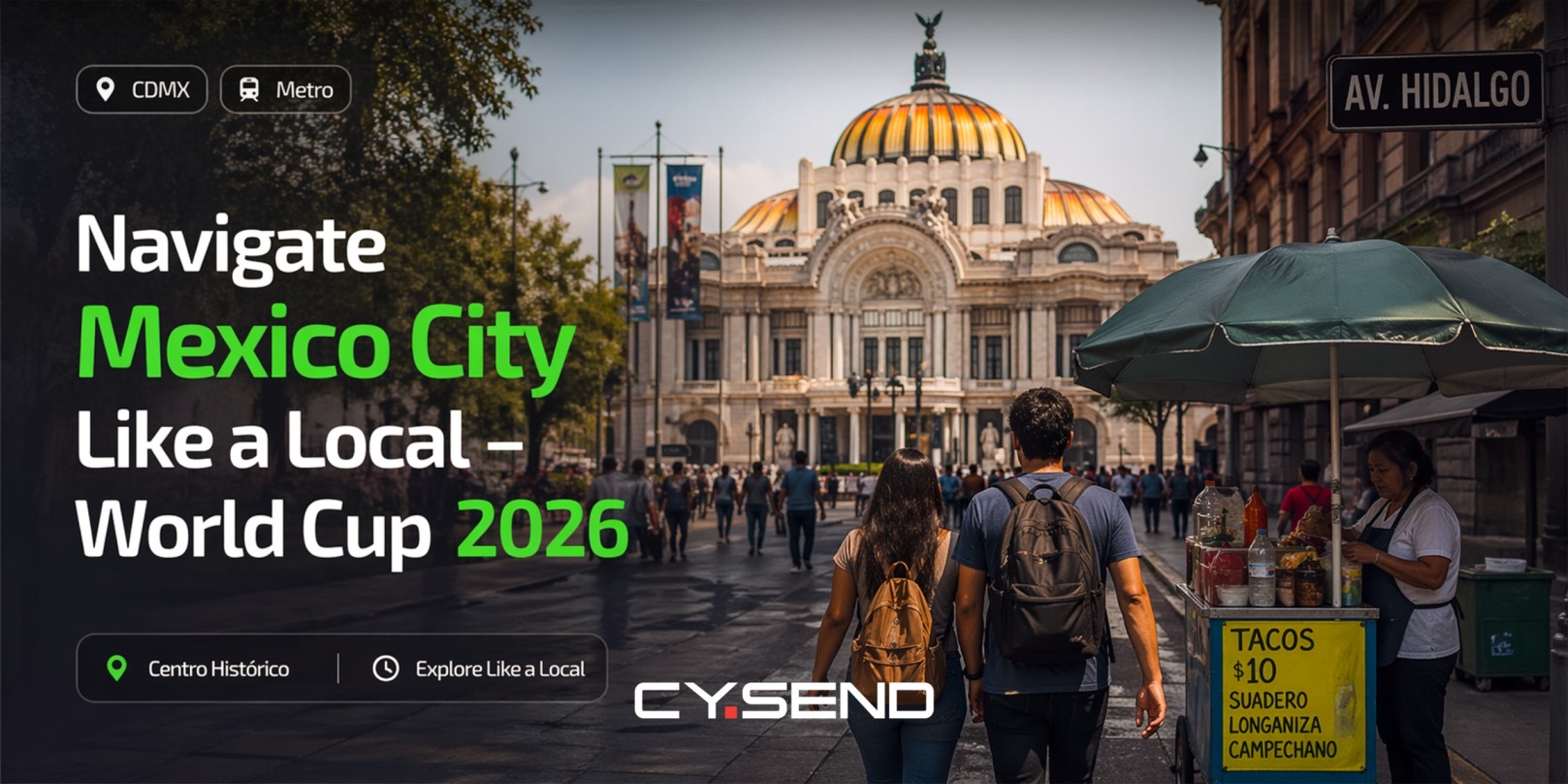
Travel & Connectivity • Reading time: 1-2 minutes
The buzz is already building. The legendary Estadio Azteca, now called Banorte Stadium, is preparing to make history again as a three-time host stadium. If you are planning your trip for the Mexico City world cup matches, you are in for an experience that goes far beyond ninety minutes of football.
Mexico City, or CDMX (Ciudad de México) as the locals call it, is a sprawling, vibrant, chaotic, and utterly magnificent metropolis. It is a city steeped in deep history, incredible gastronomy, and a passion for soccer that rivals anywhere else on earth.
However, navigating a mega-city of over 20 million people during one of the biggest sporting events on the planet can be daunting. First-time visitors often fall into tourist traps, struggle with transportation logistics, or miss out on the authentic rhythm of the city because they are too worried about safety.
Our goal is to move you past the typical tourist experience. This guide will give you the practical, on-the-ground intelligence you need to navigate CDMX with confidence, manage your travel essentials smartly, and enjoy the fiesta like a true chilango (Mexico City local).
Why CDMX is the ultimate World Cup destination
While the World Cup is spread across three nations for the upcoming tournament, Mexico City holds a special place in footballing lore. It’s where Pelé lifted the trophy in 1970 and where Maradona scored the "Goal of the Century" in 1986. The atmosphere during a match is simply electrifying.
But beyond the stadium, CDMX is a world-class destination. It boasts more museums than almost any city in the world, an exploding culinary scene ranging from Michelin-starred dining to 50-cent street tacos, and distinct neighborhoods that feel like entirely different cities.
The key to enjoying it during the tournament is preparation. You want to spend your time soaking up the atmosphere, not stuck in legendary traffic or worrying about how to pay for your next meal. Proper planning ensures you experience the best of Mexican hospitality.
Essential tips for navigating Mexico City during the World Cup
To truly enjoy the tournament, you need to strip away the anxiety of logistics. Here is how to tackle the sprawling beast that is CDMX.
1. Mastering the Metro (Without getting overwhelmed)
The Mexico City Metro system is one of the busiest, cheapest, and most extensive in the world. During the World Cup, it will be your lifeline to avoid paralyzing surface traffic. It costs merely 5 pesos (about $0.25 USD) per ride.
However, it is intense. During rush hour, it is incredibly crowded. If you are traveling with luggage, avoid it. For female travelers and children, the front carriages of the trains are designated "women and children only" during peak hours. This is strictly enforced.
Buy a rechargeable "Tarjeta de Movilidad Integrada" card at any station machine to avoid constant ticket lines. This card also works for the Metrobus and Cablebus, making it a versatile tool for any traveler.
2. The rideshare reality: Uber vs. Taxis
For safety and convenience, rideshare apps are generally preferred over hailing random street taxis. Uber, Didi and Cabify are widely available, very affordable by international standards, and offer tracking features that increase safety.
While the iconic pink and white CDMX taxis are everywhere, there have been historical issues with unmetered rides or "taxis piratas" (pirate taxis). If you must take a regular taxi, ensure you take one from an official "sitio" (taxi stand) rather than hailing one on the street.
Another option for getting around is renting a car in Mexico City, especially if you plan to explore beyond the main tourist areas or want more flexibility in your schedule. That said, driving in Mexico City can be challenging due to heavy traffic, complex roads, and limited parking in some neighborhoods, so it is usually better suited for travelers who are already comfortable driving in large cities. For those who prefer to arrange this part of the trip in advance, can be a practical option.
3. Strategic accommodation: Where to stay vs. Where to play
A common mistake for Mexico City world cup visitors is trying to stay right next to Banorte Stadium (Estadio Azteca). The stadium is located far in the south of the city, in the Santa Úrsula neighborhood, which is primarily residential and far from main attractions.
You are better off staying in central, walkable neighborhoods known for restaurants and bars, and commuting to the stadium for the match. Look at areas like Roma Norte, Condesa, Juárez, or Reforma. These areas are safe, vibrant, and packed with other fans.
They also give you better access to recommended local spots, including specialty coffee shops, bakeries, casual brunch places, traditional cantinas, and late-night taco stands. Staying in these areas means you can enjoy much more of the city between matches, instead of limiting yourself to the stadium zone.
An airbnb gift card or an hotels gift card could make it much easier for you to pay for and book a stay in Mexico City.
4. Staying connected: Sorting your SIM card before you land
Navigating CDMX requires Google Maps, rideshare apps, and translation tools. Relying on spotty public Wi-Fi is not an option. You need a local mobile connection to stay safe and informed.
The main carriers are Telcel (best coverage), Unefon, AT&T Mexico, Movistar, Bait and Flash Mobile. You can buy a SIM card at the airport, but you will often pay a premium. A better option is to buy one at an OXXO convenience store on every corner in the city.
If you want to hit the ground running, you can easily top up local Mexican mobile numbers using services like CY.SEND before you even arrive. This ensures you are connected the moment the wheels touch the tarmac.
5. Cash is king (for tacos, at least)
While Mexico City is modern and credit cards are accepted in hotels and malls, cash (Mexican Pesos - MXN) is still absolutely essential. The best food in the city is often found at street stands and small fondas.
Don't rely on USD or Euros; vendors won't accept them, or you will get a terrible exchange rate. Use bank ATMs located inside secure buildings or banks to withdraw pesos, rather than exposed ATMs on the street.
6. The pilgrimage to Banorte Stadium (Estadio Azteca): logistics matter
Getting to Banorte Stadium (Estadio Azteca) on match day is an event in itself. Traffic will be non-existent because it will be a parking lot. The best way to get there is usually a combination of Metro and Light Rail (Tren Ligero).
Take the Metro (Line 2 - Blue) to the Tasqueña terminal. From there, transfer to the Tren Ligero and ride it to the Banorte Stadium (Estadio Azteca) station. Be warned: the Tren Ligero gets incredibly packed on match days. Leave hours earlier than you think you need to.
7. Embrace "La Sobremesa" and local dining culture
In Mexico, dining is not a rush. La sobremesa is the cultural tradition of lingering at the table long after the meal is finished, talking, drinking coffee, or enjoying a digestif. It is a time for connection and relaxation.
During the World Cup, restaurants will be packed with screens showing other matches. Don't feel pressured to eat and run. Embrace the local pace. However, if you want to dine at high-end restaurants like Pujol, you need to book months in advance.
If you prefer to stay in after a long day of sightseeing or after the match, Uber Eats can be a very convenient option. It is widely used in Mexico City and allows you to order food from local restaurants, cafés, taquerías, and even some convenience stores directly to your accommodation.
8. Managing travel funds and digital gifts on the go
When traveling internationally, managing money securely is paramount. You don't want to carry excessive amounts of cash, but you also don't want to be stuck if your bank freezes your card due to "suspicious foreign activity."
Many savvy travelers use digital gift cards as a budgeting tool. For example, you can load up on Uber credits via CY.SEND so you don't have to link your primary debit card to the app while abroad. This adds an extra layer of security.
Furthermore, if you are traveling with a group, CY.SEND offers a seamless way to send digital support. You could top up a travel companion's mobile phone if they run out of data mid-match.
9. Everyday essentials: supermarkets that make life easier
One of the easiest ways to feel at home in Mexico City is knowing where to shop for everyday basics. If you need snacks, bottled water, toiletries, medicine, quick breakfast items, or even something simple for your accommodation, major self-service stores like Chedraui, Walmart, and Soriana are reliable options across the city.
These stores are especially useful if you are staying in an Airbnb or extended-stay accommodation and want to stock up on essentials instead of eating out for every meal. They can also be a smart stop before match day, so you can pick up water, fruit, snacks, or other basics ahead of time.
For travelers who like to organize expenses before a trip, gift cards for stores like these can also be a practical way to budget everyday purchases in advance.
10. Quick bites and familiar stops while exploring the city
Part of feeling comfortable in a giant city is knowing you can always find a familiar place for a quick stop while walking between neighborhoods, sightseeing, or taking a break between activities.
In Mexico City, spots like Nutrisa, Wingstop, and Starbucks can be easy go-to options when you want something quick and recognizable. Nutrisa is especially popular for a light treat, coffee, or frozen yogurt-style stop, while Wingstop and Starbucks offer the kind of familiar experience many international visitors appreciate when they want something easy, fast, and dependable.
For travelers who want something more local, taco stands and other traditional Mexican street snacks are also part of the everyday food culture of the city. They are a great way to try the kinds of casual, everyday flavors that locals actually eat. Just keep in mind that many of these small spots operate in cash only, so it is a good idea to carry some Mexican pesos with you. The good news is that prices are usually very affordable.
Of course, the city is full of incredible local options, and you should absolutely explore those too. But having these recognizable places in the mix can make the experience feel less overwhelming, especially during a busy trip like the World Cup.
As you explore the city, you will also come across familiar urban comforts: coffee shops, quick snack spots, convenience stores, and even Librerías Gandhi, a beloved bookstore chain that adds to that easy, lived-in feeling many travelers appreciate.
Comparison: CDMX transportation options at a glance
| Feature | Metro/Metrobus | Rideshare (Uber) | Regular Taxi | Walking |
|---|---|---|---|---|
| Cost | Very Low ($) | Moderate ($$) | Moderate ($$) | Free |
| Speed | Fast (No traffic) | Slow (Traffic) | Slow (Traffic) | N/A |
| Comfort | Low (Crowded) | High (Private) | Medium | Varies |
| Safety | Moderate | High (Tracked) | Moderate | High (Zones) |
FAQs: Your Mexico City World Cup questions answered
Q: Is Mexico City safe for World Cup tourists?
A: Generally, yes, especially in the main tourist zones like Roma, Condesa, and Polanco. However, you must exercise caution. Avoid wearing flashy jewelry and keep your phone secured, particularly in crowded areas near the stadium.
Q: Can I drink the tap water in CDMX?
A: No. Do not drink tap water in Mexico City regardless of where you are staying. Always buy bottled water for drinking and brushing your teeth. Ice in reputable restaurants is usually made from purified water.
Q: How far in advance should I arrive at Bnorte Stadium (Estadio Azteca)?
A: For a Mexico City world cup match, aim to arrive at the stadium perimeter at least 3 hours before kickoff. The security checks and the sheer size of the stadium complex mean it takes a long time to get to your seat.
Q: Do I need to speak Spanish to get around?
A: You can survive with English in major hotels, but basic Spanish is incredibly helpful for taxis and street food. Locals appreciate the effort. Download offline Spanish in Google Translate before you go.
Q: What is the best way to pay for things in CDMX?
A: A mix is best. Use credit cards for hotels and large meals. Use Pesos cash for taxis, street food, and small purchases. Always carry some small change (coins) for public toilets or tips. And of course, gift cards are one of your best options
Q: What if I lose my wallet or run out of money?
A: Ensure you have a backup credit card kept separate from your wallet. Services like CY.SEND can also be a lifesaver, allowing friends back home to instantly send you digital gift cards for essentials like food or transport.
Q: Are ATMs safe to use in Mexico City?
A: Yes, but only use ATMs located inside bank branches, shopping malls, or hotels. Avoid standalone ATMs on the street, especially at night, to reduce the risk of card skimming or theft.
Q: What is the altitude like in Mexico City?
A: CDMX is high—about 7,350 feet above sea level. You may feel short of breath for the first day. Stay hydrated, avoid heavy drinking immediately upon arrival, and take it easy until you acclimate.
Q: Can I use US Dollars in Mexico City?
A: Generally, no. While some tourist-heavy vendors might accept them at a poor exchange rate, the official currency is the Mexican Peso. You should always transact in Pesos for the best value.
Q: Where is the best nightlife during the World Cup?
A: The neighborhoods of Roma and Condesa are the epicenters of nightlife. They are packed with trendy bars and clubs that will be buzzing during the tournament.
Final thoughts: preparing for the fiesta
Attending the Mexico City world cup is a bucket-list experience. The passion of the Mexican fans is infectious, and the city itself is a stunning backdrop for the world's game. It is a place where memories are made.
By planning your transportation and having smart solutions for connectivity, you can focus on what really matters: the football and the food. Don't let logistics dampen your experience. Be prepared and travel smart. For more information, check the Official FIFA World Cup Schedule.
Get ready to shout "Gol!" at the top of your lungs in one of the world's greatest cities. For secure mobile top-ups and digital gift cards to keep your travels smooth, CY.SEND is always here to help.