Vancouver 2026: the fan’s logistics manual for BC Place
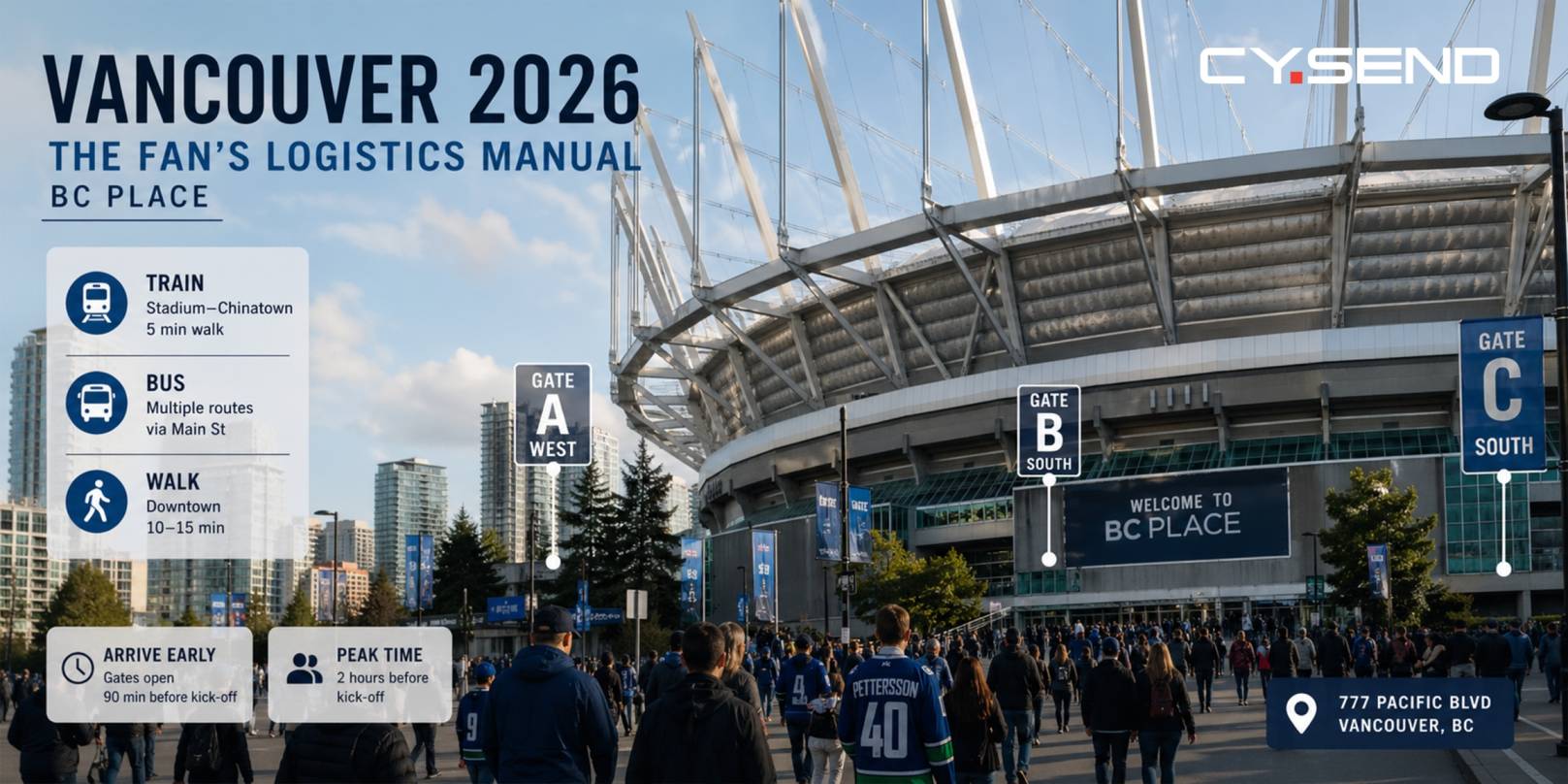
Travel & Connectivity • Reading time: 1-2 minutes
The excitement is already building. The world’s biggest sporting event is coming to North America, and Vancouver has been chosen as a key host city. For football purists and globe-trotting sports fans, the allure of seeing matches played against the stunning backdrop of British Columbia’s mountains and ocean is irresistible. However, for the international traveler—especially the digital nomad juggling work and passion—attending a mega-event like this presents a significant challenge: travel complexity.
Navigating a new country during peak capacity is a logistical puzzle. From securing reliable internet connectivity the moment you land to managing cross-border payments and understanding local transit systems, the friction of travel can quickly dampen the matchday experience. The key to enjoying Vancouver 2026 lies not just in securing tickets, but in mastering the logistics surrounding them.
This guide is designed specifically for the international fan who demands a seamless experience. We will break down the essential logistics of attending matches at BC Place, ensuring your focus remains on the beautiful game, not on fighting with your phone carrier or figuring out how to pay for a train ticket.
Mastering the arrival: YVR to downtown connectivity
Your Vancouver 2026 experience begins the moment wheels touch down at Vancouver International Airport (YVR). Consistently rated as one of the best airports in North America, YVR is incredibly user-friendly, but the influx of global fans will test its efficiency.
The absolute best way to get from YVR to downtown Vancouver—where BC Place and most fan accommodations are located—is the Canada Line SkyTrain. It’s fast, cost-effective, and immune to the inevitable traffic jams that will clog roads during match days. The station is directly connected to the international terminal. A ride to Waterfront Station in the heart of downtown takes roughly 26 minutes.
However, before you even step onto the train, you face the first hurdle of international travel: connectivity. You need to pull up maps, check reservation confirmations, and perhaps let family know you’ve arrived safely. Relying on spotty airport Wi-Fi is a gamble digital nomads shouldn't take. You need your phone working immediately.
Staying connected: The digital nomad’s lifeline
Staying connected in Canada is essential for travelers, digital nomads, and anyone visiting Vancouver for a major event. From checking transit routes and using ride-sharing apps to sharing updates with family or managing last-minute plans, mobile data can quickly become one of the most practical parts of the trip. Instead of relying only on roaming or searching for a physical recharge point, travelers with a Canadian prepaid SIM can use CY.SEND to top up mobile airtime online, instantly and from anywhere.Navigating BC Place: The heart of the action
The jewel of Vancouver’s sports infrastructure is BC Place. Located on the north side of False Creek, its iconic retractable roof dominates the skyline. For the 2026 tournament, this venue will be the epicenter of the city's energy.
The stadium’s location is one of its greatest assets. It is centrally located in downtown Vancouver, making it highly walkable from major neighborhoods like Yaletown, Gastown, and the Central Business District. It is situated at 777 Pacific Blvd.
When preparing for matchday logistics at BC Place, keep the following in mind (based on current operational standards which are likely to be enforced or tightened for 2026):
- Gate Entries: BC Place has multiple entry gates. Your ticket will specify the best gate for entry. Familiarize yourself with the stadium map beforehand to avoid walking the perimeter unnecessarily.
- Bag Policy: Expect a strict bag policy. Currently, BC Place adheres to a policy restricting bag sizes and types (usually small clutch purses or clear bags). For a global event, assume these rules will be rigidly enforced to ensure security and speed up entry lines. Travel light to the stadium.
- Cashless Venue: BC Place is a fully cashless venue. All concessions and merchandise stands only accept cards or digital payments. This brings us to the next crucial logistical challenge: managing finances abroad.
The financial logistics: Payments without borders
Managing money in a foreign currency is often a major pain point for international travelers. Dealing with fluctuating exchange rates, high foreign transaction fees on your credit cards, and the insecurity of carrying large amounts of cash can complicate your trip.
While you will need some methods for direct payment, digital nomads often use alternative strategies to manage spending and enhance security. One effective method is utilizing digital gift cards for everyday services. This allows you to budget effectively in your home currency and spend easily in Vancouver without constantly swiping your primary bank card at every coffee shop or taxi ride.
For instance, rather than worrying if your ride-share app is linked to the right card or incurring international fees for every trip across town, you can load up your account beforehand using CY.SEND. We provide a secure platform to purchase thousands of digital gift cards that are instantly redeemable.
- Simplify your transport spending: Purchase an Uber gift card to manage your ride-sharing budget easily during your stay.
- Explore global solutions: Discover the full range of international payment and gifting solutions on our homepage: https://www.cysend.com/.
Getting around Vancouver: Public transit & smart travel
Getting around Vancouver can be simple if you plan your transport options before arriving. If you are staying downtown, walking to BC Place may be the easiest choice on match days, while TransLink’s SkyTrain, bus network, and SeaBus are the main public transit options for moving across the city. Visitors can use a Compass Card, load day passes or stored value, or check the official TransLink website for the latest routes, fares, and schedules as 2026 approaches.
However, not every trip fits neatly into a public transit route. Some visitors may need a ride late at night, a car for a road trip outside Vancouver, or fuel while exploring British Columbia by road. That is where digital gift cards can help organize different parts of the journey in advance. In the CY.SEND catalog, travelers in Canada can find mobility-related options across several categories: ride-sharing for short city trips, fuel cards for road travel, car rental and travel gift cards for longer routes, and airline gift cards for domestic or international connections.
Ride-sharing and local mobility
For short trips across Vancouver, airport transfers, late-night returns, or moments when public transit is not the most convenient option, ride-sharing gift cards can be a practical backup. CY.SEND offers Canada-based options such as Uber and Lyft, allowing travelers to keep flexible transport credit available without depending entirely on cash, card payments, or roaming-heavy app setup at the last minute.
Fuel and road travel
For visitors renting a car or planning to explore beyond Vancouver, fuel gift cards can support road trips across British Columbia and other parts of Canada. Options such as Esso and Mobil or Petro-Canada can be useful for fuel, convenience-store purchases, car care, or stops along the route, helping travelers manage transport-related expenses more easily.
Car rental and travel flexibility
Travelers who want more freedom to visit areas outside the city may prefer renting a car, especially for nature trips, family travel, or multi-city itineraries. CY.SEND’s catalog includes travel-oriented options such as RentacarGift, Global Auto Card powered by Expedia, and TripGift, which can support car rental or broader travel bookings depending on the product’s terms.
Flights and intercity travel
For longer distances across Canada or connections before and after the tournament, airline gift cards can also be part of the transport plan. Options such as Air Canada, WestJet, and Porter Airlines give travelers more flexibility when organizing domestic flights, regional connections, or onward travel after visiting Vancouver.
For fans traveling from the UK, CY.SEND is also running a lastminute.com promotion that can make planning the trip even more rewarding. UK residents who join the offer:
- can unlock up to a £49.99 free lastminute.com gift card
- a 15% discount on travelgiftcard.lastminute.com
- 10X more rewards on every order
- and access to 65,000+ products worldwide.
This can be especially useful for travelers arranging flights, hotel stays, transport, or last-minute travel essentials before heading to Canada. The promotion is valid until 30/05/2026 and applies to UK residents only.
Beyond the pitch: Where to stay and what to eat
Vancouver is a diverse city composed of distinct neighborhoods. Your choice of where to stay will dictate your daily logistics.
- Downtown Core/Yaletown: The most convenient for BC Place access. You can walk to the stadium and are surrounded by high-end dining and nightlife. Expect premium pricing during the tournament.
- Gastown: Historic charm, cobblestone streets, and a vibrant food scene. Walkable to the stadium, but be aware that it borders areas that can feel grittier at night.
- Mount Pleasant/Main Street: A hub for breweries, hip cafes, and a younger crowd. Easily accessible by transit.
Vancouver’s food scene is legendary, particularly for Asian cuisine and fresh Pacific Northwest seafood. When dining out, remember that tipping of 15-20% is standard practice in Canada.
If you are using CY.SEND to manage mobile top-ups or gift cards for dining apps while in Vancouver, it's important to understand the specifics of the service.
- Understand the service: Read our FAQ on important information regarding the product or service to ensure smooth transactions while traveling.
Frequently asked questions: your Vancouver 2026 toolkit
Is BC Place a cashless venue?
Yes. BC Place is a cashless venue, and cash payments are not accepted inside the stadium. Visitors can use major digital payment methods, including debit cards, credit cards, Tap to Pay, Google Pay, and Apple Pay.
What is the time zone in Vancouver during the tournament?
Vancouver is in the Pacific Time Zone. During the summer, Pacific Daylight Time is in effect, which is UTC-7.
Can I use Uber and Lyft in Vancouver?
Yes. Uber and Lyft operate in Vancouver, but matchday traffic, road closures, and event restrictions may affect pick-up and drop-off points. For BC Place, Vancouver’s official World Cup guidance lists taxi and ride-hailing drop-off points at 1510 Quebec Street near Science World and 525 W 2nd Ave near Olympic Village Station.
How quickly are mobile top-ups sent via CY.SEND delivered?
Mobile top-ups are usually delivered instantly or within a few minutes after payment confirmation. Delivery time may vary depending on the mobile operator, destination country, and transaction review.
Do I need a special power adapter for Canada?
Canada uses Type A and Type B plugs, with a standard voltage of 120V and frequency of 60Hz. Visitors from Europe, Asia, and other regions may need a plug adapter. Many modern phones, laptops, and tablets are dual-voltage, but always check the charger label before using it in Canada.
Can I buy a Canadian SIM card if I do not live there?
Yes. Visitors can usually buy prepaid SIM cards or eSIM plans from Canadian mobile providers, airport kiosks, electronics stores, or online providers. Availability, ID requirements, and plan options may vary. Once you have a supported Canadian number, you may be able to use CY.SEND to keep it topped up.
Is tap water safe to drink in Vancouver?
Yes. The City of Vancouver says its drinking water is regularly monitored and meets water quality standards, making it safe to drink. Bringing a reusable water bottle is a practical choice for visitors.
Are there fees associated with using CY.SEND?
A service fee may apply. The total cost is shown before you confirm the payment, so you can review the amount before completing the purchase.
What is the primary language spoken in Vancouver?
English is the main language used by visitors, transit staff, hotels, restaurants, and stadium services. Vancouver is also highly multicultural, so you may hear many other languages across the city, including Mandarin, Cantonese, Punjabi, Tagalog, Spanish, and others.
How far in advance should I book accommodation for 2026?
As early as possible. World Cup dates are expected to create strong demand in Vancouver, especially near downtown, BC Place, and transit-connected areas. Once your match plans are clear, compare cancellation policies and book accommodation early to avoid higher prices or limited availability.
Ensure your matchday is seamless
The 2026 gathering in Vancouver promises to be a once-in-a-lifetime spectacle. The energy of the city, combined with the global passion for football, will create an unforgettable atmosphere. Don't let the friction of travel logistics—a dead phone battery, a declined foreign card, or transit confusion—pull you out of that moment. By planning your connectivity and financial logistics now, you ensure that the only thing you need to worry about is the final score.