World Telecommunication and Information Society Day: why digital connectivity matters across borders
Travel & Connectivity • Reading time: 1–2 minutes
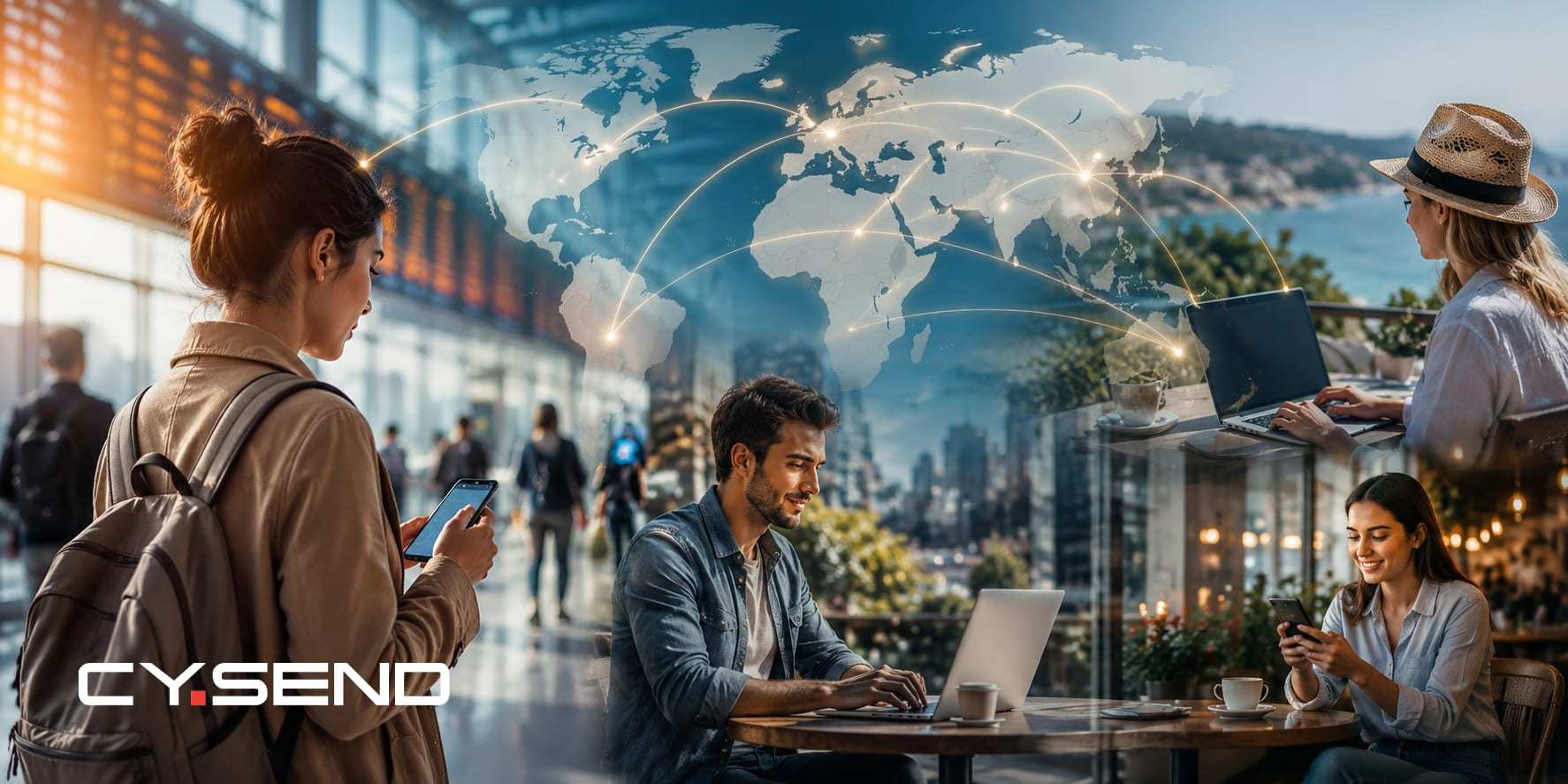
Picture this: You’ve just landed in a new country. The customs line was long, your luggage is heavy, and you step out of the airport doors into the humid air of an unfamiliar city. Your instinct is to pull out your phone, open a ride-sharing app, pull up the address of your accommodation on a map, or send a quick "I've arrived safely" message to your family back home.
But your screen stares back at you with the dreaded words: "No Service."
For the modern international traveler, digital nomad, or expatriate, this moment of disconnection is more than just an inconvenience; it’s a disruption of a vital lifeline. In our hyper-connected era, access to digital networks isn't a luxury—it's a fundamental necessity for navigating logistics, maintaining income streams, and nurturing relationships across oceans.
This reliance on cross-border digital access is exactly why World Telecommunication and Information Society Day (WTISD), observed annually on May 17th, is far more than just a date on the United Nations calendar. For those of us living life out of a suitcase or residing far from our birth country, the themes of this day resonate deeply with our daily reality. It is a global acknowledgment of the digital bridges we cross every day to live, work, and love internationally.
Understanding World Telecommunication and Information Society Day
While it might sound like a bureaucratic mouthful, World Telecommunication and Information Society Day marks the anniversary of the signing of the first International Telegraph Convention and the creation of the International Telecommunication Union (ITU). It is a day dedicated to raising awareness of the possibilities that the use of the Internet and other information and communication technologies (ICT) can bring to societies and economies, as well as of ways to bridge the digital divide.
Every year, the ITU selects a theme that highlights a critical aspect of global connectivity. These themes often revolve around making digital access equitable, affordable, and universal. You can read more about the history and current themes on the official International Telecommunication Union (ITU) website.
For the global citizen, WTISD is a reminder that the seamless connectivity we often crave—and sometimes take for granted until it's gone—is the result of immense global cooperation and infrastructure. It highlights the ongoing struggle to ensure that people everywhere, regardless of their location, have access to the digital tools necessary to participate in the modern world.
The digital nomad's dilemma: Connectivity as a lifeline
For the growing community of digital nomads and international travelers, the "digital divide" isn't an abstract concept; it's a daily logistical hurdle. Your ability to earn an income is directly tied to the quality of your connection. A dropped video call with a client, inability to access cloud documents, or failure to receive a two-factor authentication SMS can mean lost revenue and professional embarrassment.
Furthermore, connectivity is your safety net. It’s how you translate street signs in Tokyo, how you navigate the public transport system in Berlin, and how you access emergency banking services if your wallet is stolen in Barcelona. When you are far from home, your smartphone is your interpreter, your navigator, and your bank branch all rolled into one.
The pain point here is acute: the constant, underlying anxiety of securing reliable, affordable access. Travelers often find themselves juggling expensive roaming packages, hunting for questionable public Wi-Fi, or navigating the sometimes complex process of acquiring local SIM cards in a foreign language. The need for instant, secure digital access is paramount.
If you encounter issues with connectivity or digital services while abroad, knowing how to get help quickly is crucial. It's always smart to know how to contact customer support for the services you rely on.
Bridging the emotional gap: Supporting loved ones from afar
Beyond the practicalities of work and navigation, WTISD also speaks to the emotional core of international living. Moving abroad doesn't mean severing ties. In fact, digital tools are often the only thing holding families together across time zones.
For millions of migrants and expatriates, the mobile phone is the modern hearth. It’s where you watch your nieces and nephews grow up via video chat, where you share photos of your travels, and, crucially, how you provide support.
One of the most significant ways international residents support their families back home is through digital remittances and mobile top-ups. Sending airtime or data to a parent's phone in another country isn't just a transaction; it's an act of care. It ensures they can call a doctor, stay in touch with relatives, or access the internet for their own needs.
For example, a Nigerian living in London can instantly recharge a family member's phone in Lagos, ensuring the lines of communication remain open. You can see how easily this is done on our Nigeria mobile top-up page. This capability is the very essence of what a connected information society should look like—technology serving human connection.
The CY.SEND solution: Your passport to global access
At CY.SEND, we recognize that for the international traveler and the global diaspora, digital access is non-negotiable. Our platform was built to directly address the challenges of cross-border connectivity and support. We believe that geography should not be a barrier to caring for your loved ones or accessing essential services.
We provide a secure, instant, and reliable way to send mobile airtime, data packages, and digital gift cards to over 140 countries globally. Whether you need to top up your own phone to avoid exorbitant roaming charges or send a grocery gift card to your family back home, CY.SEND serves as your central hub for international digital transactions.
We bridge the gap between different financial systems and telecommunication networks, offering a wide array of payment methods to suit your location and preferences. By simplifying the process of acquiring digital credits internationally, we empower travelers and migrants to maintain control over their connectivity and their ability to support others, embodying the spirit of World Telecommunication and Information Society Day every single day.
Overcoming international connectivity challenges
While we advocate for universal access, the reality on the ground for travelers can still be tricky. Here are a few ways to manage your digital life on the move:
1. Diversify your access
Don't rely on a single source of connectivity. Have a primary plan (like a local SIM or a travel eSIM), but know where the reliable co-working spaces or cafes with secure Wi-Fi are located.
2. Prioritize security
Public Wi-Fi in airports and hotels can be a security risk. Always use a Virtual Private Network (VPN) when accessing sensitive information like bank accounts or work servers on public networks.
3. Utilize digital gift cards for essential services
Sometimes, direct credit card payments to foreign services get flagged or declined. Using digital gift cards purchased through a reputable vendor like CY.SEND can be a smoother way to pay for international services. For instance, keeping a Skype gift card topped up ensures you can always make international calls to landlines or mobiles, even if your data connection is weak.
4. Know your payment options
When you are traveling, your usual payment methods might not always work. It's important to use platforms that accept a variety of global payment types. You can check what payment methods are accepted on CY.SEND to ensure you always have a way to transact.
Frequently asked questions about global connectivity & CY.SEND
What is CY.SEND?
CY.SEND is a digital platform that lets users buy and send mobile top-ups, data packages, gift cards, payment cards, and other digital products across supported countries and territories.
How fast are transactions on CY.SEND?
Mobile top-ups are usually delivered instantly or within a few minutes after payment confirmation, depending on the mobile operator and destination country. Digital gift cards are usually delivered by email as a code or PIN, depending on the product.
Is it safe to use my card on CY.SEND while traveling?
Yes. CY.SEND uses secure payment processing and protection measures to help keep transactions safe. When traveling, always use the official CY.SEND website, avoid shared devices, and use a secure connection when making payments.
Do I need to create an account to use CY.SEND?
Account requirements may depend on the product, payment method, or verification process. Creating a CY.SEND account can make future purchases easier because you can access your order history and manage your details more conveniently. Find more information in our FAQ section.
Can I send a gift card to someone in a different currency?
Yes, depending on the product and region. Many gift cards are country- or region-specific, so the recipient usually needs to redeem the card in the region for which it was issued. If currency conversion is needed during checkout, the final amount is shown before payment.
What happens if I send a top-up to the wrong phone number?
Mobile top-ups are usually final once processed. If the top-up is sent to a valid number, it may not be possible to reverse it. Always double-check the country, operator, and phone number before confirming the transaction.
Are there fees associated with using CY.SEND?
A service fee may apply. The total cost is shown before you confirm the payment, so you can review the amount before completing the purchase.
Can I use CY.SEND to top up my own phone while traveling?
Yes. Travelers can use CY.SEND to top up supported mobile numbers, including local SIM cards, while abroad. Just make sure you select the correct country, operator, and phone number.
How do I know if my order was successful?
You will usually receive an order confirmation by email after purchase. If you have a CY.SEND account, you can also check your order status in your order history.
What regions does CY.SEND cover?
CY.SEND supports digital products across 253 countries and territories, including options in Africa, Asia, Europe, the Americas, and Oceania. Availability depends on the product type, destination country, and provider.
Stay connected wherever the journey takes you
World Telecommunication and Information Society Day is a powerful reminder that in the 21st century, connectivity is the foundation of opportunity, safety, and community. For those who choose to explore the world or live outside their borders, maintaining that connection is vital.
Don't let borders limit your ability to work, explore, or care for the people you love. As you plan your next adventure or look for ways to support family back home, ensure your digital access is secure and ready. Visit CY.SEND today to explore how easily you can keep the world within reach.